
A summer-before-kindergarten play plan can provide a few recurring ideas while leaving most of the day open for ordinary family life. It should not become a second school timetable or a list of skills a child must master before entering a classroom.
Check the receiving school's guidance and supports. Use this plan as a menu of shared activities, not as an assessment of readiness.
Week one: stories and conversation
Choose a familiar picture book and revisit it in different ways. One day, let the child describe a picture. Another day, imagine what happens after the ending. Later, draw a new character and dictate a sentence about it.
Use the family's languages. A home-language conversation can remain valuable even when the school's main language is different. Our bilingual routine offers flexible examples.
Week two: useful marks and names
Make a sign for a pretend shop, a label for a drawing, or a map to a toy's house. Offer a written-name model if the child wants it. Pointing, dictating, drawing, and attempting letters are different ways to contribute.
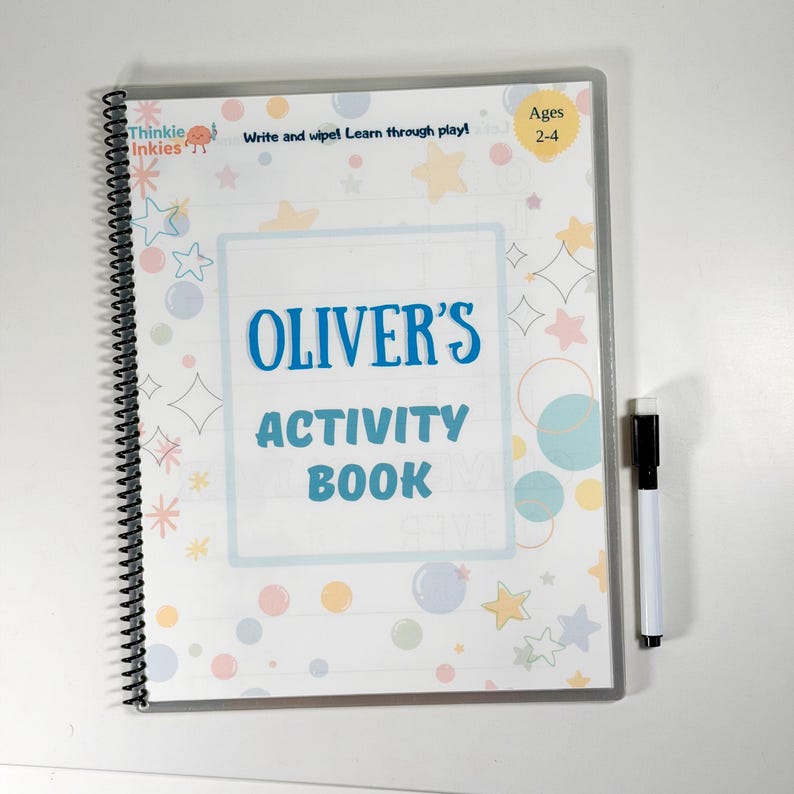
If tracing is enjoyable, use one suitable page from a reusable activity book. It is an optional format, not the center of the summer plan. Preview the pages and check the age guidance before choosing it.
Week three: numbers in everyday play
Give each toy one pretend picnic place. Count a small group of large blocks before building. Make a simple numeral sign for the number of pretend customers in a shop.
Keep quantities small enough to follow comfortably. The one-to-one counting guide explains how moving each object once can make the task clearer.
Week four: routines and asking for help
Practice putting an item in its home, choosing an activity, and saving unfinished work. Model a short request for help, then respond when the child uses words, gestures, or their usual communication system.
If the school provides an orientation or a picture of a routine, use those actual materials. Avoid inventing promises about exactly what the classroom day will be like.
Repeat themes instead of increasing pressure
Use the same four themes again with new stories or materials the child chooses. You can skip a week during travel or illness. There is no backlog to complete.
Leave time for movement, outdoor play when appropriate, relationships, rest, and ordinary errands. The plan is a small addition to life, not a reason to turn each experience into a lesson.
Notice comfort and participation
Observe what the child enjoys, what needs help, and what questions they ask. Share relevant concerns with their healthcare professional or school, especially if difficulties affect everyday activities. More practice pages are not a substitute for appropriate support.
For the broader picture, read kindergarten readiness beyond handwriting. For a short daily entry point when that helps the household, use the five-minute learning rhythm without treating five minutes as a required dose.
Every child develops differently. Use age guidance, supervise activities and choose materials appropriate for your child and home.
Published by ThinkieInkies. General play ideas, not clinical advice. Product details are available in the linked product listings; general learning ideas are provided for inspiration and should be adapted to each child with adult supervision.