Why a tiny routine works better than a long lesson
A child’s own name is often the most interesting word on the page. It appears on bedroom doors, cubbies, artwork, and birthday cards, so tracing it feels personal rather than abstract. The goal of a name tracing routine is not to produce perfect handwriting on demand. It is to make the sequence of letters familiar through a short activity that can be repeated without turning the table into a classroom.
Choose a reliable moment when neither adult nor child is rushing. Two or three minutes after breakfast, before a story, or while dinner is being prepared can be enough. Stop while the activity still feels manageable. A predictable finish builds a better association than extending practice until attention disappears. If your child only traces the first letter today, that still counts as participating in the routine.
Prepare the name before the marker comes out
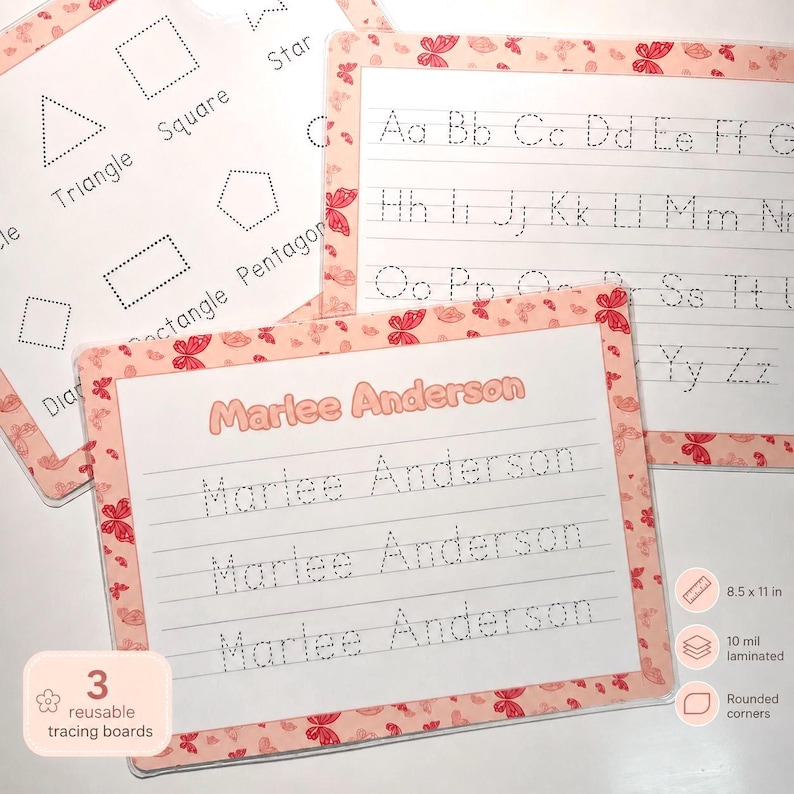
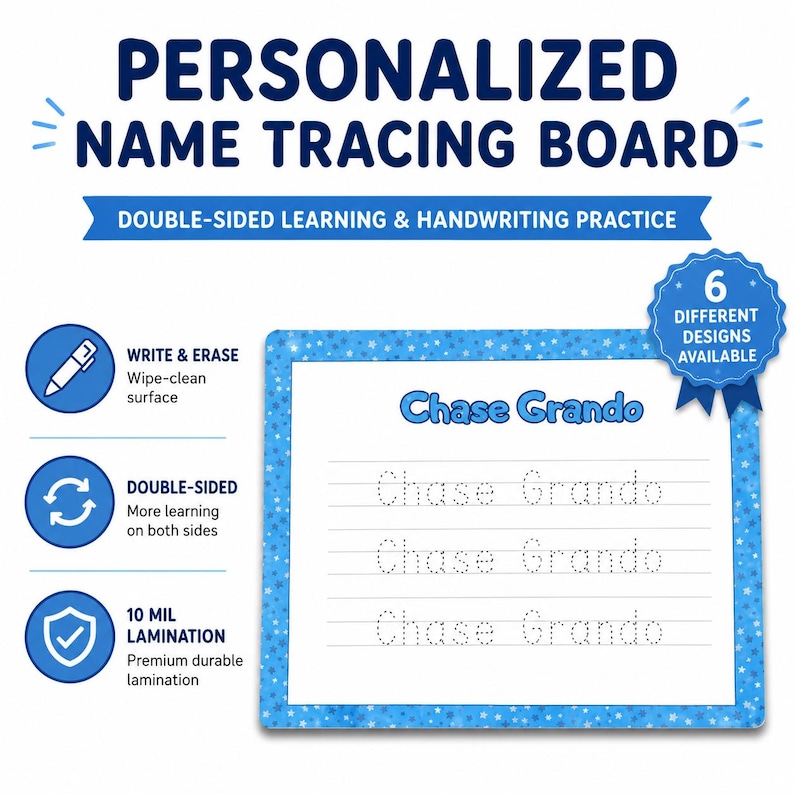
Start by saying the name naturally and noticing its first letter: “Maya starts with M.” Then slowly read the remaining letters from left to right. You do not need to quiz your child. Simply point and name what is already there. On a personalized name tracing board, show where the first stroke begins with your finger before offering a marker. This quick preview reduces the number of instructions needed once the child starts.
Set up only the materials you need: the board or page, one suitable marker, and the recommended cleaning cloth. Check the product instructions before choosing a writing tool, because reusable surfaces can require different marker types. Place the surface at a comfortable angle and keep the child’s other hand free to steady it. Adult supervision is important, especially when markers, caps, or other small accessories are present.
Use the same five-step name game
Repeating the same sequence lets the child know what happens next. Keep your language brief and warm, and treat each step as an invitation. The routine can stay identical for a week while the playful prompt changes. That balance creates familiarity without making every attempt feel exactly the same.
- Find: ask the child to point to the first letter.
- Say: read the name together once, without testing.
- Trace: follow one letter or the whole name at an easy pace.
- Spot: choose a favorite, tallest, roundest, or repeated letter.
- Reset: wipe the surface together and put the marker away.
Make repetition feel different without changing the goal
On one day, let a toy “watch” the name appear. On another, whisper each letter, trace only the initials, or count how many straight and curved lines you can see. You can also write the first letter on a sticky note and search for the same shape on a cereal box or book cover. These small variations keep the focus on the same name while adding a reason to look closely.
Avoid correcting every wobble. If the marker leaves the path, describe the next useful action instead: “Let’s find the starting dot again.” When a child does not want to trace, offer a low-effort role such as pointing, naming colors, or wiping the board. Participation can change from day to day. Returning calmly tomorrow protects the routine better than negotiating for one more line.
Know when to add alphabet practice
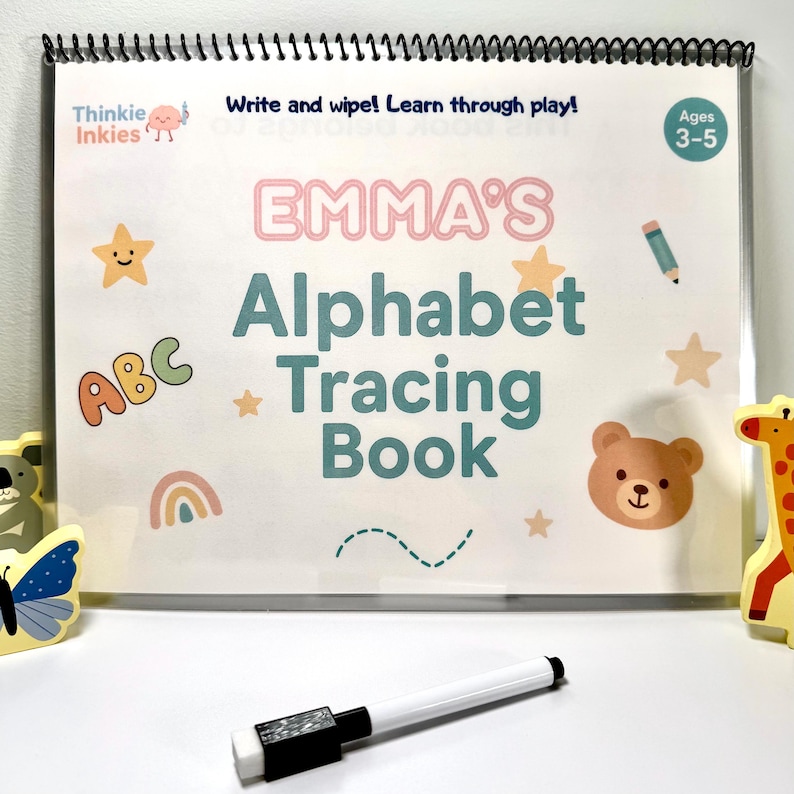
Once the name sequence is familiar, connect one of its letters to a wider alphabet activity. A personalized alphabet tracing book can help a child notice that the M in Maya also appears in moon, map, and other words. The progression does not have to run from A to Z. Following the letters that already matter to the child often gives the next activity an immediate point of reference.
For more reusable-surface ideas, continue with the complete write-and-wipe activity guide. It covers marker checks, cleaning habits, and simple ways to rotate letters, numbers, and shapes. The most useful measure of progress at home is not a flawless finished name; it is growing familiarity with the routine, the letter order, and the idea that marks can be tried, erased, and tried again.
Every child develops differently. Use age guidance, supervise activities and choose materials appropriate for your child and home.
Written and reviewed by the ThinkieInkies team behind these learning tools. Product details are available in the linked product listings; general learning ideas are provided for inspiration and should be adapted to each child with adult supervision.