What makes write-and-wipe activities useful at home
A reusable activity changes the emotional weight of a mark. A line can be attempted, wiped away, and attempted again without using another sheet of paper. That makes write-and-wipe books and tracing boards practical for short bursts of play at the kitchen table, in a waiting bag, or during a quiet afternoon. They are tools for repetition, not a promise that every child will follow the same writing timeline.
The best setup is deliberately simple. Pick one page or board, one compatible marker, and one small cloth. Too many choices can turn preparation into the main event. Before the first use, read the care information that comes with the product. Test the marker on a small unobtrusive area if the instructions recommend it, and never assume that every washable or dry-erase marker suits every reusable surface.
Create a reliable use-and-clean station
Store the activity, marker, and cleaning cloth together in a shallow tray or zip pouch that an adult can reach easily. A placemat underneath defines the work area and catches stray marks. Keep food and drinks to one side so crumbs and moisture do not become part of the wipe-down. For younger children, an adult should handle marker caps and supervise the entire activity according to the product’s age guidance.
Make cleaning part of the activity rather than a chore that appears at the end. First recap the marker as directed. Then wipe from one edge to the other instead of rubbing randomly across the surface. If a mark remains, follow the maker’s care directions rather than reaching for household solvents. Allow the page or board to dry fully before closing or stacking it, which helps keep neighboring surfaces clean.
Try a four-part session
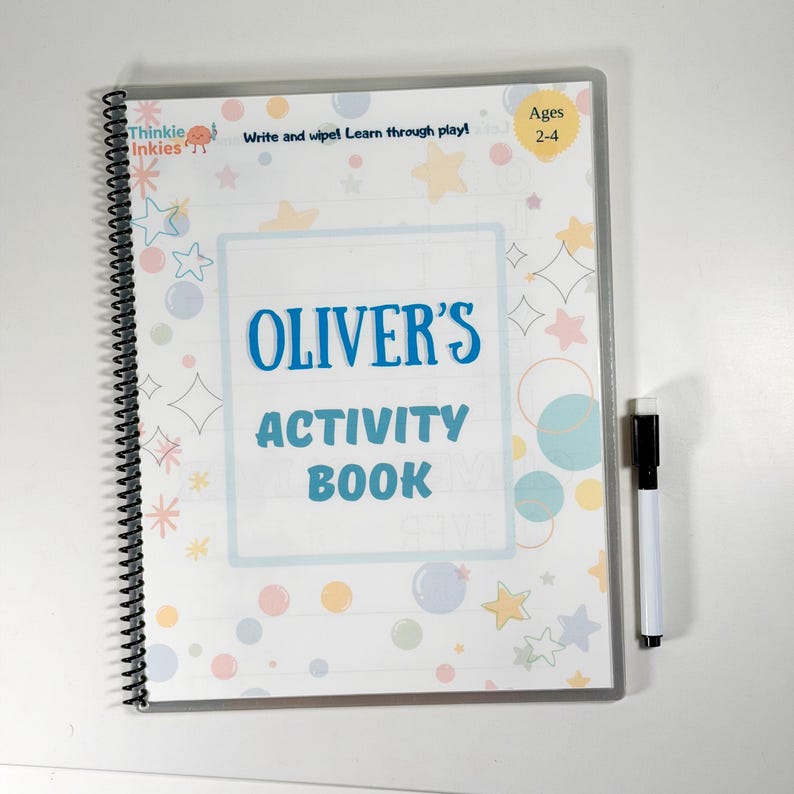
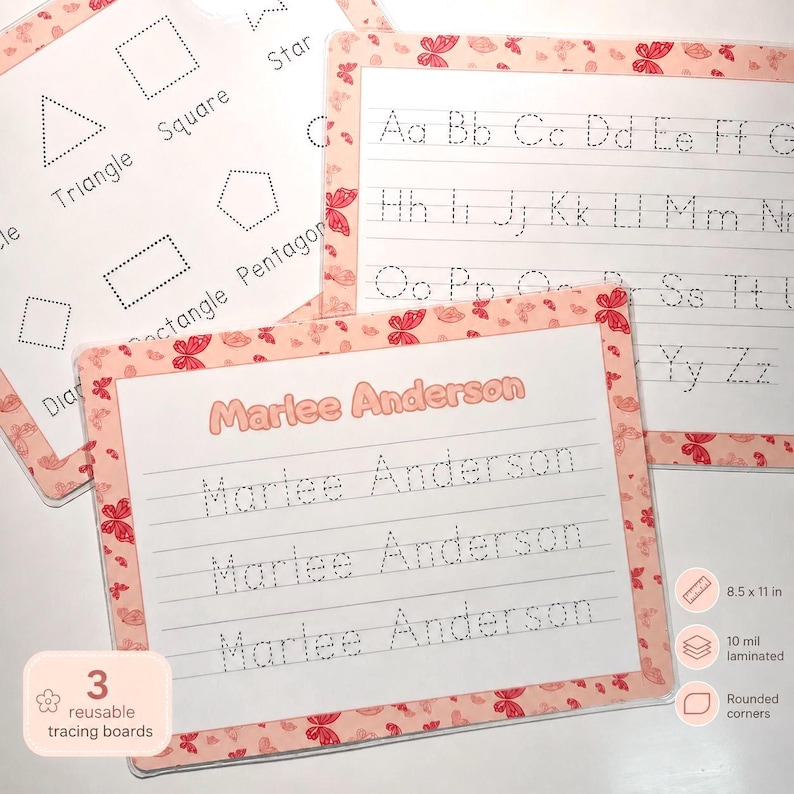
A useful write-and-wipe session can fit into five minutes. Begin with one finger trace so the child can explore the path without managing a marker. Next, trace a small section with the marker. Add one playful search prompt, then finish by wiping the surface together. This pattern works with a personalized activity book, an alphabet board, or a set that includes multiple early-learning themes.
- Finger first: follow a line, letter, number, or shape.
- Marker next: complete one manageable area rather than the whole page.
- Look again: find a curve, corner, matching pair, or favorite symbol.
- Wipe and close: reset the material so it is ready for next time.
Rotate activities without creating a complicated schedule
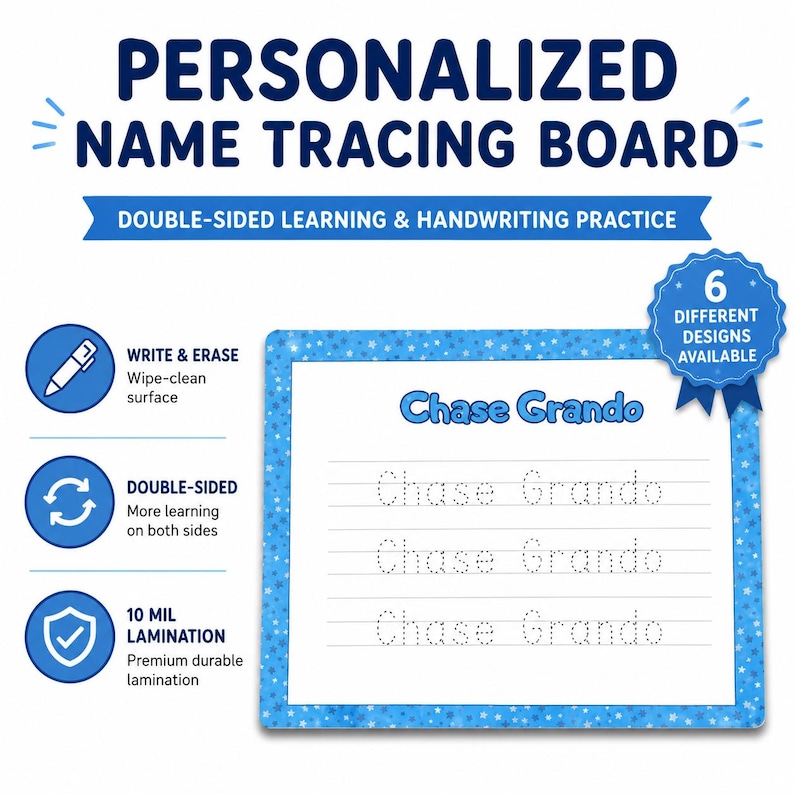
Keep only two or three options visible and store the rest. You might offer name tracing on Monday, shapes or paths on Wednesday, and alphabet work on Saturday. The exact days do not matter; the small selection does. A personalized tracing boards set makes rotation easy because the visual format stays familiar while the prompt changes. A themed option, such as a space alphabet tracing book, can refresh interest without changing the basic routine.
Follow the child’s response rather than insisting on equal time for every topic. A favorite page can be repeated for several sessions. If a page is consistently skipped, model it once, pair it with a story or object, and then put it away for another week. Rotation is meant to make materials feel available and inviting, not to create a checklist that must be completed.
Avoid the most common reusable-activity frustrations
Staining usually begins with the wrong marker, delayed cleaning, or a surface closed while damp, so care habits matter more than scrubbing harder later. Missing caps are easier to prevent when the adult keeps a small parts dish beside the activity. If the board slides, place it on a non-slip mat rather than asking the child to press down more forcefully. Always stop using a product if it becomes damaged and refer to its care guidance.
If the child is tired of tracing, use the surface for a visual hunt: point to the first letter of a name, count circles, or match two shapes without writing. The simple name tracing routine offers more ways to reduce pressure, while the screen-free toddler activity list shows how reusable books can sit alongside movement, sorting, and pretend play. Write-and-wipe materials work best as one flexible option in a varied play rhythm.
Every child develops differently. Use age guidance, supervise activities and choose materials appropriate for your child and home.
Written and reviewed by the ThinkieInkies team behind these learning tools. Product details are available in the linked product listings; general learning ideas are provided for inspiration and should be adapted to each child with adult supervision.