
One-to-one correspondence in counting means pairing each object with one number word. A child can recite a long number sequence while still skipping an object or counting the same one twice. Small, movable groups make that difference easier to explore.
Begin with a few large, age-appropriate objects. Avoid small counters for children who mouth things, and supervise the whole activity.
A picnic for three toys
Place three toys at a pretend picnic. Ask the child to give each toy one large paper plate. At first, focus on matching one plate to one toy, without saying numbers.
Then touch each plate once while counting together. Slide a plate slightly forward as it is counted so it is easier to track which ones have already had a turn. Finish by saying the total: “There are three plates.”
If the child adds another toy, ask what the picnic needs. That small problem makes counting useful rather than a performance for an adult.
Parking spaces for a small collection
Draw three broad spaces on paper and use three suitable toy vehicles. Move one vehicle into each space. Count the parked vehicles, touching or moving each once.
Spread them farther apart and count again. Ask whether any vehicles were added or taken away. Let the child investigate instead of demanding an immediate answer about the total.
A delivery with a clear amount
Put two large blocks beside an empty basket and ask for a delivery of two. Count as the child moves them. Make the next delivery a different small amount only when the first feels easy.
Avoid jumping to a much larger collection because the child knows more number words. The challenge here is keeping track of objects, not demonstrating the longest count.
What to do when counting goes wrong
If a child says two numbers while touching one object, slow the movement and count together. If objects are counted twice, make a “waiting” area and a “counted” area. If the child loses interest, return to the picnic story and leave the numbers for another time.
A correction can sound like an invitation: “Let's move them one at a time so we can keep track.” There is no need to label the first attempt as wrong.
Connect quantities to printed numerals later
After counting three items, show a card with 3 and explain that it records the amount. Recognizing that symbol is another task. Our number recognition versus counting guide shows how to keep those ideas connected without confusing them.
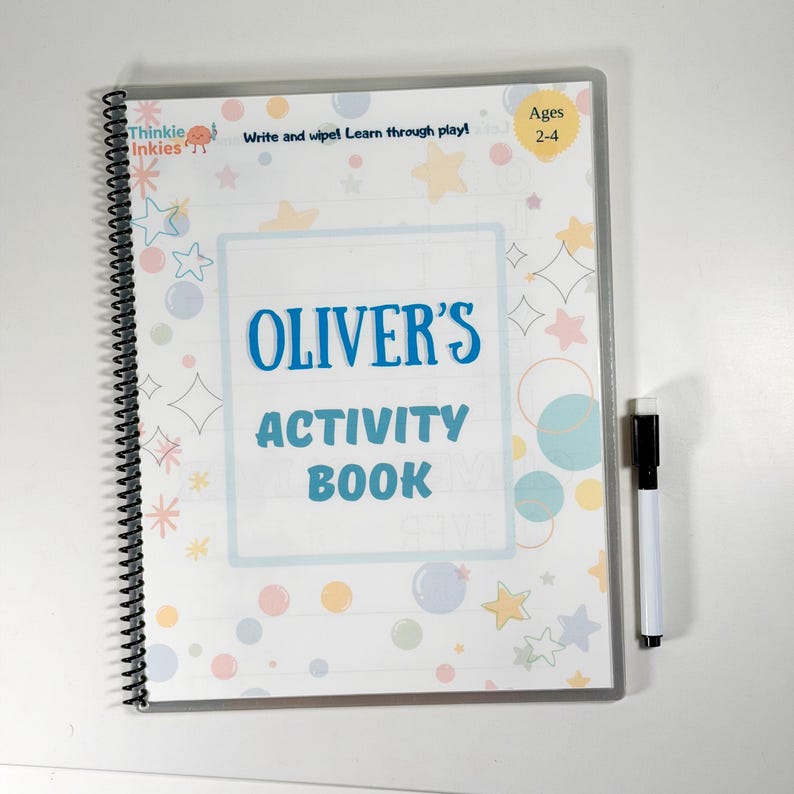
A mixed write-and-wipe activity book can provide an optional page to revisit after a real-object game. Preview the activities and match the page to what your child is exploring.
How high should we count? Start with a collection small enough to track comfortably. Increase it when the child wants another challenge, not because a worksheet includes a larger number.
Every child develops differently. Use age guidance, supervise activities and choose materials appropriate for your child and home.
Published by ThinkieInkies. General play ideas, not clinical advice. Product details are available in the linked product listings; general learning ideas are provided for inspiration and should be adapted to each child with adult supervision.