
A five-minute preschool learning routine can make it easier to begin an activity without planning a whole lesson. Think of five minutes as a manageable example, not a required amount of practice or an attention-span rule.
The routine should bend around sleep, meals, outdoor play, and the child's mood. Missing a day does not create work to catch up on.
Choose a dependable moment
Pick a moment when an adult can be present and the child is usually available: after putting breakfast dishes away, for example. Avoid attaching the routine to a consistently rushed transition.
Choose one location and a small set of materials. An accessible paper tray may be enough; markers and unsuitable accessories belong in adult-controlled storage.
Use a simple beginning, middle, and end
Beginning: offer two choices. “Would you like a counting game or a drawing path?” Show the actual materials so the choice is easy to understand.
Middle: join one small activity. Count a few suitable objects, follow one line, or tell a story about a picture. Let the child change the idea if it still works safely.
End: describe something you noticed, then put the materials away together. “You made a road with two turns. Let's save it here.” The closing observation does not need to be a judgment about being clever or getting everything right.
A sample week with room to repeat
Monday: make a route between two drawings.
Tuesday: give each toy one large pretend plate.
Wednesday: choose a familiar name card and find its first letter.
Thursday: repeat whichever activity the child requested again.
Friday: let the child invent a game using one of the materials.
This is a menu, not an assignment list. You can use the same favorite all week or replace the whole plan with a shared picture book.
Reduce preparation before adding supplies
Store only what the next activity needs. A huge choice of pages can make the start feel harder. If a reusable page is ready, keep a compatible marker and cloth nearby for adult use, following the product's instructions.
The existing write-and-wipe guide covers care. For a broader plan for materials, try our activity rotation system.
Handle the day your child says no
Offer another form of participation: they can watch, tell you what to draw, or choose a story instead. Do not use the routine as a condition for meals, affection, or basic needs. The point is a pleasant opportunity to connect.
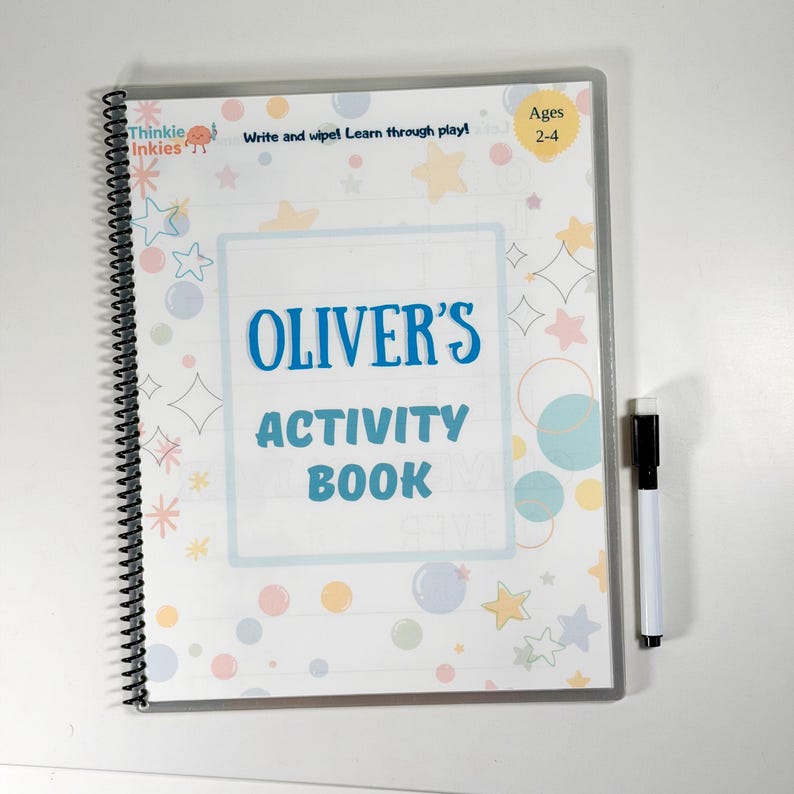
A personalized activity book can supply optional prompts, but household materials can serve the same scheduling purpose.
Should we keep going when the child is interested? Yes, if the family has time and the child remains comfortable. A short routine is a low barrier to starting, not a rule that interrupts an absorbing game.
Every child develops differently. Use age guidance, supervise activities and choose materials appropriate for your child and home.
Published by ThinkieInkies. General play ideas, not clinical advice. Product details are available in the linked product listings; general learning ideas are provided for inspiration and should be adapted to each child with adult supervision.