PersonalizedDouble sided
Toddlers, preschool, and Pre-K
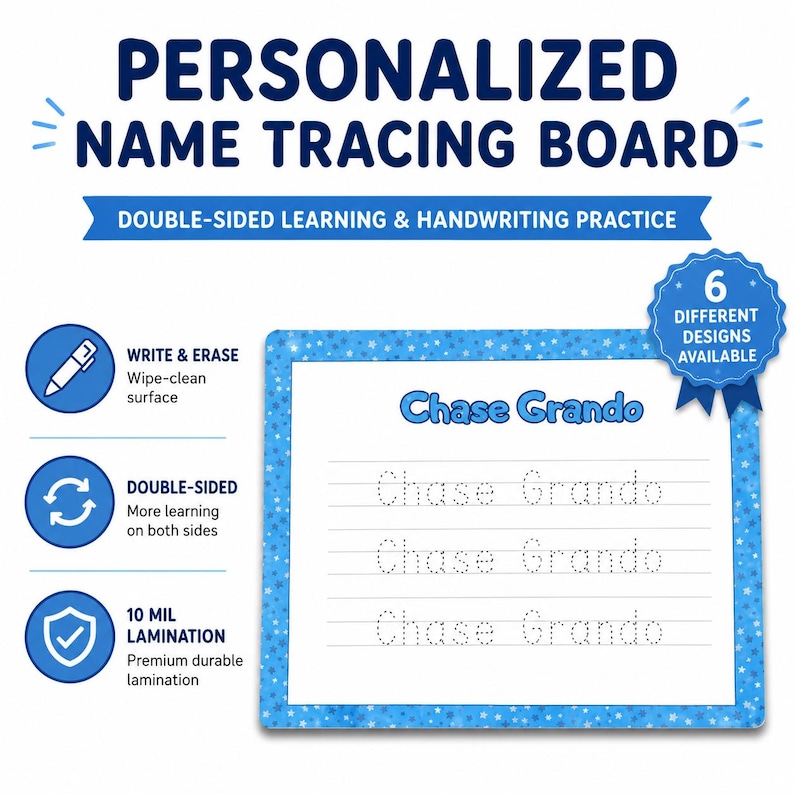
Personalized Name Tracing Board
A compact double-sided practice board featuring the child's name on one side and a chosen early-learning activity on the other.
From $16.19
View details Curated collection
Discover personalized tracing boards, name painting party favors, board sets and physical alphabet flashcards for hands-on creativity and learning.
A compact double-sided practice board featuring the child's name on one side and a chosen early-learning activity on the other.
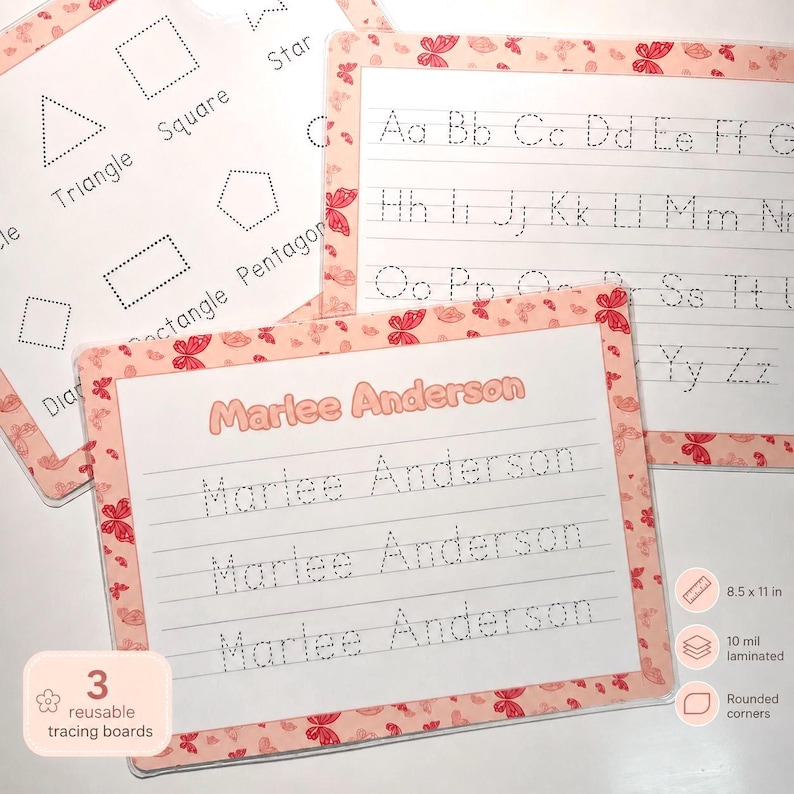
A set of three sturdy, double-sided boards for repeated name, alphabet, number, and shape practice with preschool learners.
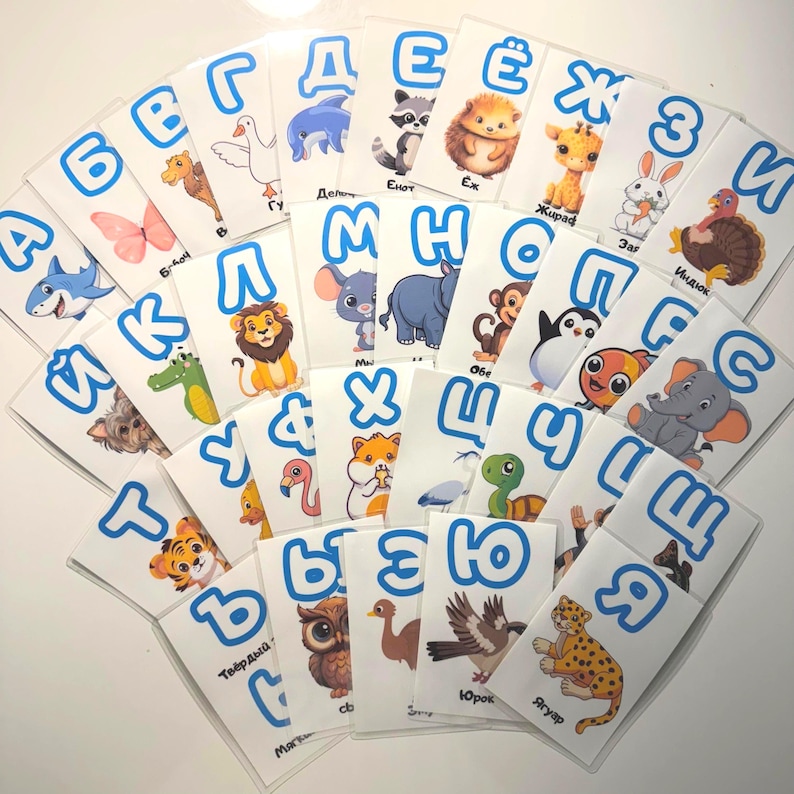
A ready-made set of laminated alphabet cards pairing all 33 Russian letters with animals and bilingual labels for repeated visual and tracing practice.
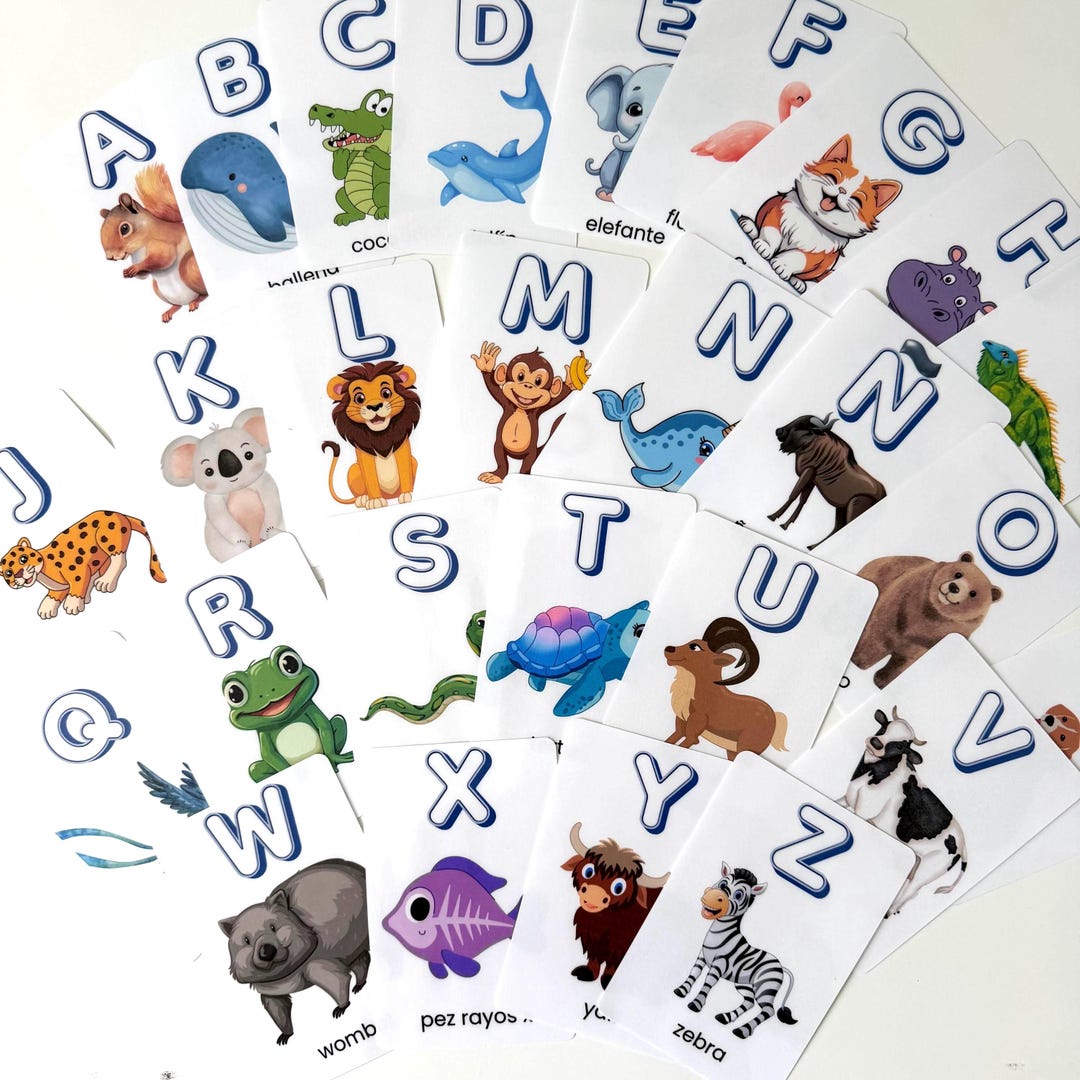
A ready-made Spanish alphabet set pairing A–Z and Ñ with animal illustrations on laminated cards for supervised letter and vocabulary activities.
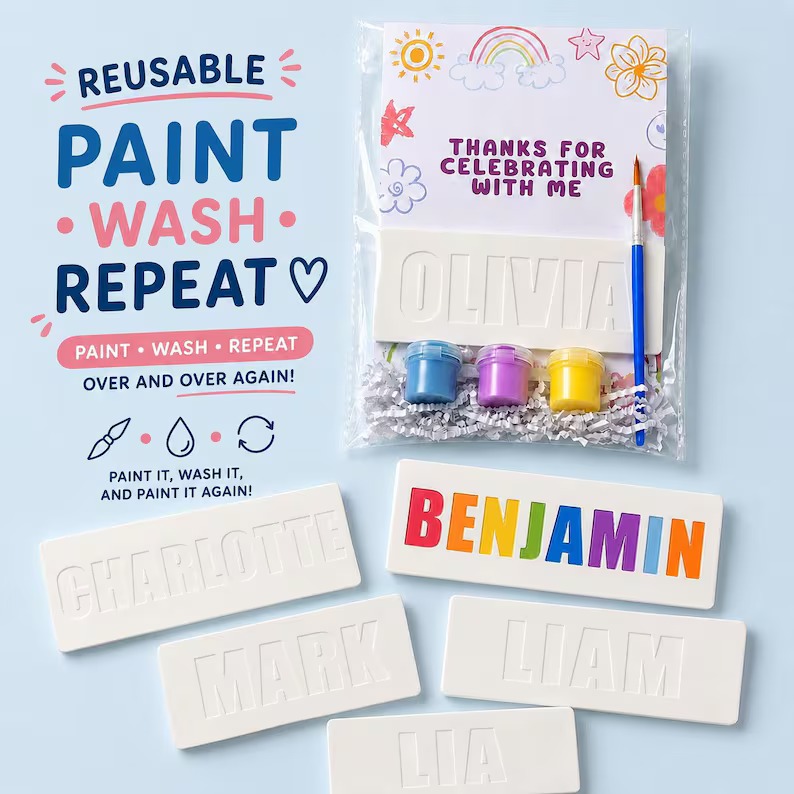
A hands-on activity for a children's party, with a personalized gift for every guest to take home. Each child paints their own name plaque and leaves with a keepsake. Every favor includes a custom 3D-printed plaque, three different paint colors and a brush, packaged and ready to hand out. Try one sample or order a party set of 5–30 favors, plus one of six insert designs.
Parent buying guide
A child’s name is meaningful, recognizable, and usually one of the first words they want to write. A tracing board gives that word a clear path while leaving room to repeat it. Begin by naming the first letter, tracing it together with a finger, and modeling the movement before asking your child to use a marker.
Pick a compact board when you want a quick routine that stores easily or travels well. Choose a full alphabet book when your learner is ready to connect name practice with uppercase and lowercase letters, pictures, and early phonics talk. A three-board set offers more room for names, numbers, shapes, and simple pre-writing lines.
Keep the goal gentle: confident movement matters more than perfect letters. Use the marker and cleaning method named on the product page, wipe the surface after play, and supervise young children throughout the activity.
Before you choose
Follow the version used most often at home or preschool. Many children begin with an initial capital and lowercase letters; enter the exact spelling in the checkout personalization field.
Try finger tracing, building the letters with play dough, or letting your child watch you trace first. Pencil control develops gradually, and a no-pressure return later is often more productive than pushing through.
Ideas before worksheets
Help your child notice their written name through matching, family labels, and playful searches before asking them to trace or write it.
Read the guideUnderstand the difference between tracing and copying letters, then try a simple side-by-side activity that leaves room for independent marks.
Read the guideA child may count aloud, recognize numerals, and count objects at different levels. Learn how to connect the three through simple everyday play.
Read the guide