
The simplest screen-free road-trip games use conversation, familiar songs, and things a properly seated child can already see. Save activities that need a table, tools, or loose materials for safe stops.
Keep the child correctly restrained, follow the restraint manufacturer's instructions, and avoid adding activity equipment that interferes with it. The driver should focus on driving; a passenger can lead games when available.
A color to notice
Choose one color and look for it outside or in the child's immediate view. The child can point or name an example without leaning, unbuckling, or reaching.
Do not make the game a race. If the view offers no examples, choose another color or imagine a place where it might appear. The game should adapt to the journey rather than directing the child's movement around the vehicle.
A story with two choices
An adult begins a story and offers a choice: “Does the bear visit the beach or the forest?” The child selects the next setting. Continue for as long as it is enjoyable.
This format works when a child does not want to invent a full sentence. It can also stop without a winner, a score, or anything to collect from the floor.
A familiar song with a new verse
Choose a family song and let the child suggest a new animal, action, or place. Keep the volume comfortable and pause if the driver needs quiet.
You can use the family's home languages. A trip is an opportunity for shared conversation, not a requirement to practice a school language for the whole ride.
Plan a different activity at a safe stop
Once safely parked and away from traffic, give the child an appropriate supervised chance to move. Follow the actual location's conditions rather than expecting every rest area to have a safe play space.
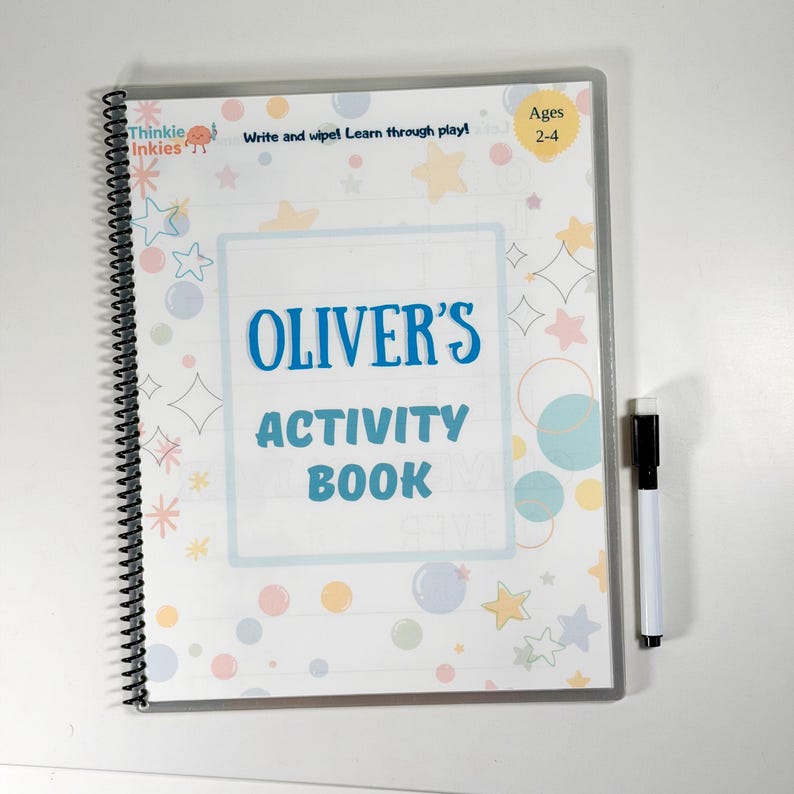
If there is a suitable table and the child wants to sit, open one familiar activity page. A write-and-wipe book can be a stop-time option with adult supervision and compatible tools. Pack it away securely before driving again.
Keep the goal realistic
No set of games guarantees a peaceful long drive. Build the plan around the family's needs, and allow quiet time when the child does not want another prompt. A child staring out the window does not need to be turned into a learning activity.
If looking down causes discomfort, put materials away and adjust the plan. Discuss recurrent motion-sickness concerns with the child's healthcare professional rather than relying on a particular activity to prevent them.
For organizing stop-time supplies, use the travel busy-bag checklist. Air travel has different space and movement constraints; our airplane activity guide treats that setting separately.
Every child develops differently. Use age guidance, supervise activities and choose materials appropriate for your child and home.
Published by ThinkieInkies. General play ideas, not clinical advice. Product details are available in the linked product listings; general learning ideas are provided for inspiration and should be adapted to each child with adult supervision.