
A quiet-time basket gives a preschooler a small selection of lower-noise activities during a slower part of the day. It is not a promise of silence or a replacement for sleep a child still needs.
Choose the location and supervision first. An activity that uses markers, dough, or detachable pieces may need direct adult involvement even if it is marketed for quiet play.
Choose three different ways to participate
Include one familiar picture book, one drawing option, and one simple hands-on item suitable for the child. The selection should offer different experiences without filling the floor with materials.
A child might look at pictures today and draw tomorrow. There is no need to complete a basket in the way someone completes a checklist.
Make the setup visible
Put the basket beside a comfortable, uncluttered activity area. Keep it away from sleeping infant spaces and leave walking routes clear. Use a separate adult container for tools or accessories the child should not access alone.
Show what happens at the start: choose one item, use it in the agreed area, and return it before opening another if that rule suits the child. Model the steps without requiring perfect cleanup from the first attempt.
Offer realistic choices
Try “Look at a book with me or draw while I sit beside you.” That is clearer than expecting a child to infer what quiet time means.
Quiet can still include conversation. A child describing every picture has not failed the activity. If a lower noise level is necessary because a sibling is sleeping, explain the practical reason and offer a nearby space where an adult can stay involved.
Keep one familiar favorite
Do not replace the entire basket whenever you rotate materials. Keep one dependable choice and change one other item when interest fades. Our activity rotation guide offers a simple tracking method.
If the child repeatedly ignores an item, remove it without treating the lack of interest as a problem. A smaller basket can be more useful than a collection that requires constant encouragement.
Where a reusable book belongs
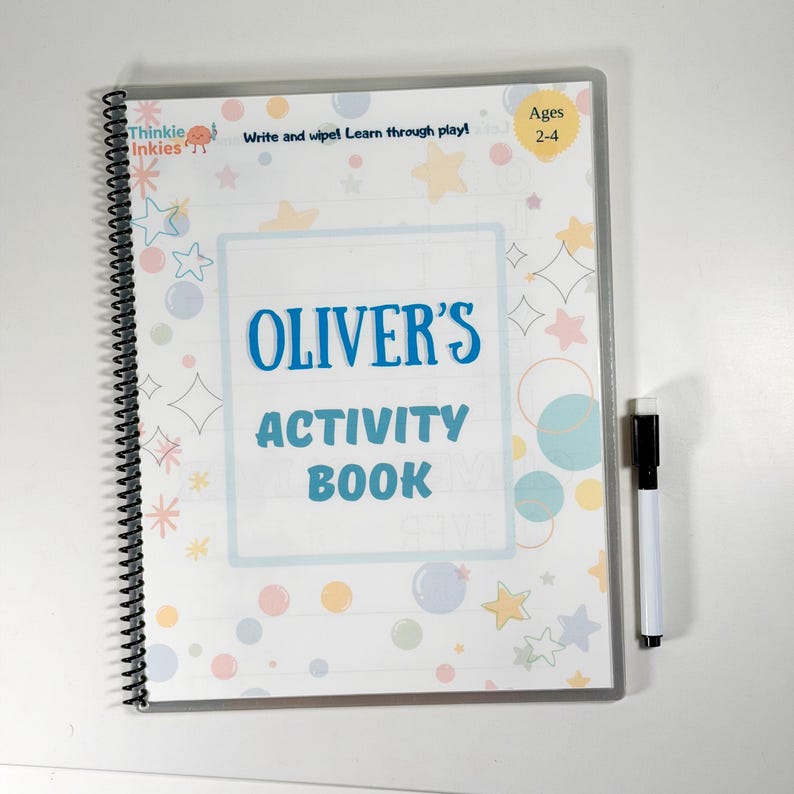
A write-and-wipe activity book can be an option when an adult can supervise the marker and cleanup. Offer one page and let the child choose how to engage. It need not become formal writing practice during a rest period.
For a comparison of book formats, read the existing busy book, quiet book, and activity book guide. These names describe varied products; inspect each one's actual materials and age guidance.
How long should quiet time last? Start with what is comfortable for the child and the household. If the child becomes distressed or clearly needs movement, adjust the plan. A predictable, pleasant pause is more useful than enforcing an arbitrary duration.
Every child develops differently. Use age guidance, supervise activities and choose materials appropriate for your child and home.
Published by ThinkieInkies. General play ideas, not clinical advice. Product details are available in the linked product listings; general learning ideas are provided for inspiration and should be adapted to each child with adult supervision.