Why these three book labels are easy to confuse
Busy book, quiet book, and activity book are often used as if they describe one product. In practice, the labels can point to very different materials. One family may call a felt book with zippers and snaps a busy book, while another uses the same phrase for a laminated binder with matching pieces. An activity book might be a paper workbook, a sticker book, or a reusable write-and-wipe book. The name alone rarely tells you what arrives in the package.
Instead of choosing by label, compare the actual format, included pieces, age guidance, cleanup, and kind of participation each book invites. Think about the moment you want it for: a five-minute table routine, supervised travel, open-ended sensory play, or focused letter practice. No format is automatically more educational or more engaging. The useful choice is the one that fits the child’s current interests and the adult support realistically available in that moment.
What families usually mean by a quiet book
A traditional quiet book is commonly made from felt or fabric and contains hands-on elements such as flaps, buckles, laces, buttons, pockets, or movable shapes. Pages may invite a child to fasten clothing, match colors, build a face, or move pieces through a scene. The tactile construction is part of the experience, and many quiet books are intended to be explored without a pencil or marker.
Check every listing carefully because fabric books vary widely. Some pieces are permanently attached; others detach with hook-and-loop fasteners or snaps. Loose pieces and fasteners require close attention to the maker’s age and safety guidance, particularly for children who still mouth objects. A handmade felt book may also have different washing and storage instructions from a printed book. Quiet does not mean unsupervised: the adult still needs to inspect the item and stay nearby as directed.
What a busy book can include
Busy book is the broadest of the three terms. Retailers may use it for a felt quiet book, a ring-bound folder with detachable matching pieces, a wipe-clean workbook, or a collection of paper puzzles. The common idea is simply that the pages give the child something active to do. That makes busy book useful as a search phrase, but not as a reliable description of construction or contents.
When comparing a busy book, look past the cover and review several interior pages. Ask whether pieces detach, whether an adult must prepare or laminate anything, which writing tool is required, and how the pages reset for another use. Confirm the finished dimensions if you plan to carry it, and check whether it can lie flat on the surface available. A book with many tiny pieces may suit one supervised home routine but be awkward in a car, restaurant, or waiting room.
How laminated write-and-wipe activity books differ
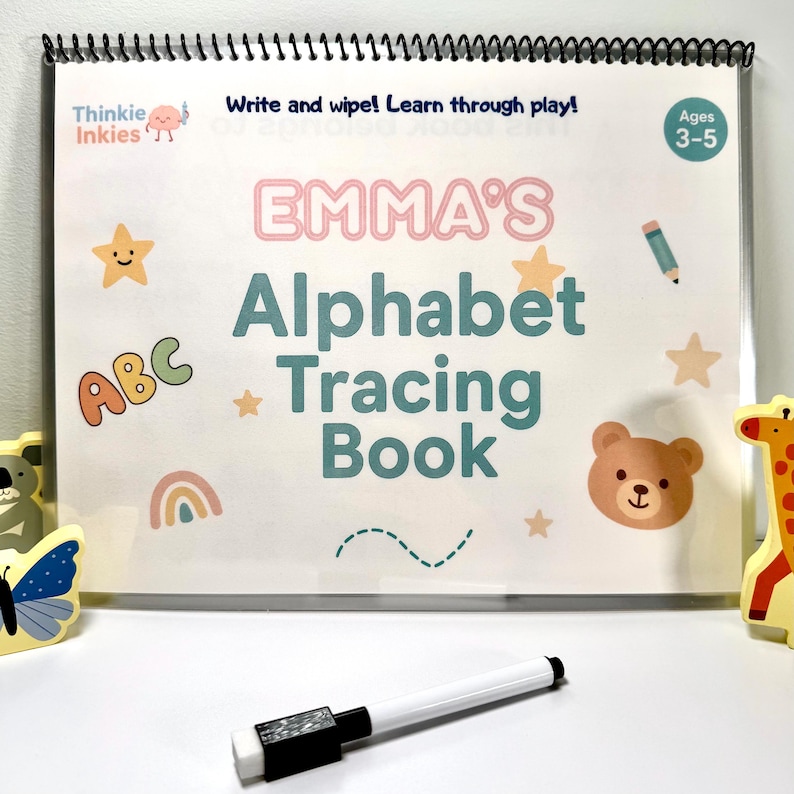
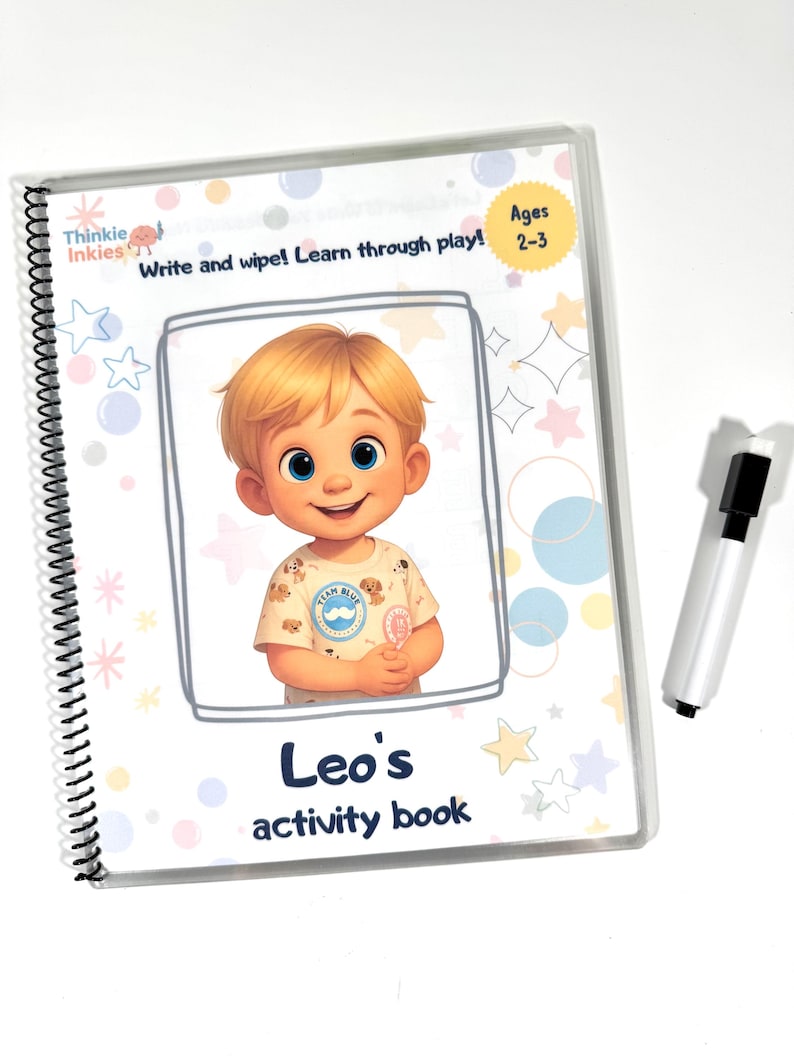
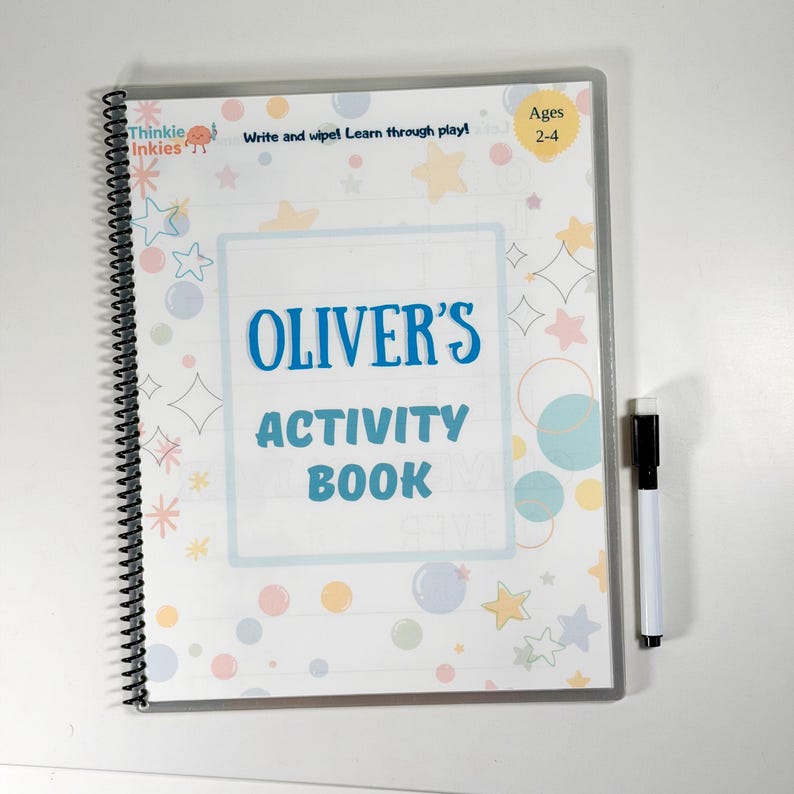
ThinkieInkies activity books are laminated write-and-wipe books, not felt quiet books. Their activities are printed on wipe-clean pages and are completed by tracing, circling, matching visually, counting, pointing, or talking about the pictures. Depending on the specific listing, a book may focus on the alphabet and a child’s name or combine early-learning prompts such as lines, shapes, numbers, animals, logic, and attention activities. The product page identifies the exact contents and whether a marker is included.
This format works best on a stable surface with an adult managing the compatible marker, cap, and cleanup. A mark can be wiped away so a page can be revisited, but reusable does not mean maintenance-free. Follow the care instructions, clean pages after the session, let them dry before closing, and stop using damaged materials. Children can also participate without writing by finding a picture, choosing a page, naming a color, or watching an adult model one line.
Compare the formats by the moment you need to fill
A useful comparison starts with the routine rather than a promise about outcomes. Consider where the book will be used, how much setup the adult accepts, and whether the child currently prefers manipulating objects, drawing marks, looking for matches, or telling stories from pictures. These examples are practical starting points, not fixed rules:
- For tactile fasteners and fabric textures, inspect a felt quiet book with securely constructed elements and suitable age guidance.
- For a variety of detachable puzzles, examine the exact busy-book contents and decide whether loose pieces fit the setting.
- For repeatable tracing and visual prompts, consider a laminated write-and-wipe activity or alphabet book on a flat surface.
- For a child drawn to familiar details, a personalized name page or portrait cover can provide an inviting place to begin.
- For travel, compare the closed size, number of accessories, marker storage, cleanup needs, and the space available during the trip.
Choose the smallest useful starting point
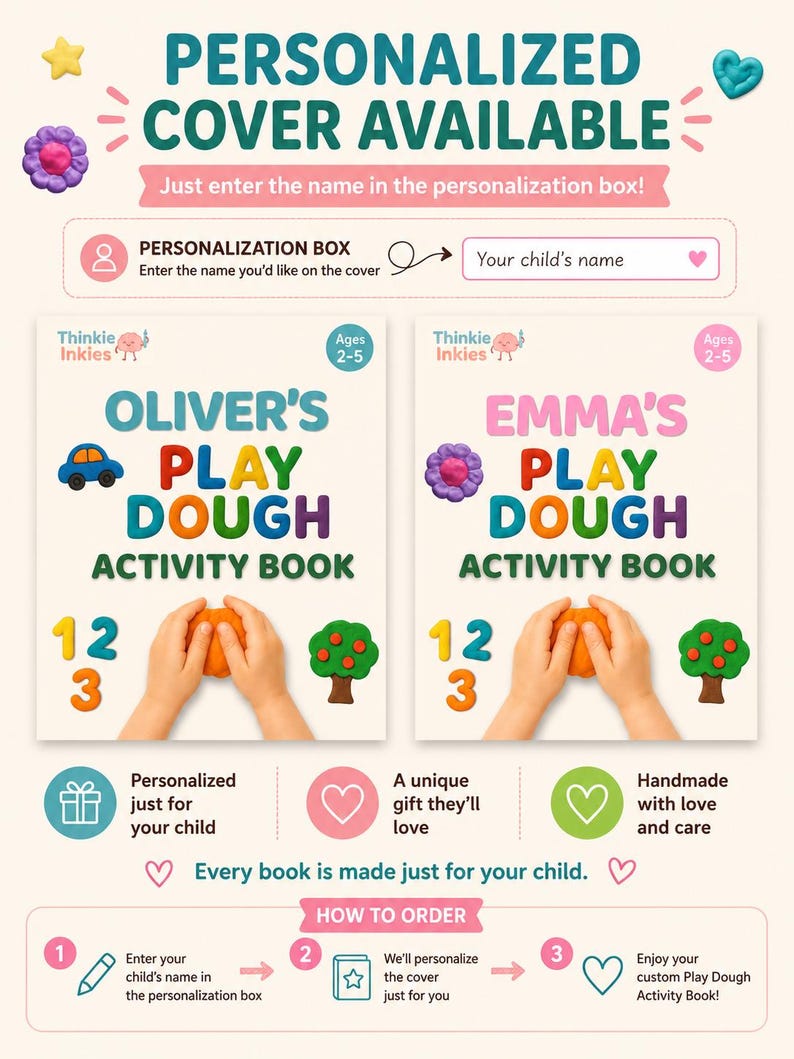
Before ordering, read the format line, package contents, dimensions, personalization instructions, care notes, and current processing estimate. Look at the interior activities rather than assuming that every page matches the headline. If personalization is offered, check spelling and image requirements before submitting. If a product needs a marker, dough, fasteners, or other accessories, confirm which are supplied and which the family must provide.
Begin with one page or one interaction and stop while the experience is still comfortable. A child does not need to finish the book, use every feature, or produce a perfect result for the material to have a place in the routine. The complete write-and-wipe guide explains setup and cleaning in more detail, while the screen-free activity guide shows how a reusable book can sit beside movement, stories, and open-ended play rather than carrying the whole day by itself.
Every child develops differently. Use age guidance, supervise activities and choose materials appropriate for your child and home.
Written and reviewed by the ThinkieInkies team behind these learning tools. Product details are available in the linked product listings; general learning ideas are provided for inspiration and should be adapted to each child with adult supervision.