A play dough number mat is most useful when it connects a printed numeral with an amount the child can see and change. Building the shape of 4 and counting four objects are different tasks. Make space for both without expecting them to develop together.
Use suitable dough under close adult supervision. Check ingredients and age guidance, and keep dough separate from real food. If a child mouths materials, choose another counting activity.
Make a simple mat yourself
Draw a large numeral on one side of paper and a clear counting area on the other. Protect the paper only with a surface suitable for the chosen material, or use a separate play mat beside the paper.
Begin with a small number. An adult can prepare the dough portions if dividing them distracts from the counting game. The child can flatten, point to, or move the portions as you count together.
Give the amount a purpose
Draw a pretend plate for a toy. Ask for two dough pancakes, then place them one at a time on the plate. Count slowly, touching each once, and show the numeral that records the amount.
If the child makes one enormous pancake, let the pretend meal continue. You can count one pancake today. A successful activity does not require recovering the original adult plan.
Change the collection
After counting three dough shapes, remove one and ask what changed. Count again together rather than expecting an instant arithmetic answer. Later, add the piece back.
You can also compare two small groups. Line them up in pairs to see which group has an extra piece. Keep the quantities manageable and avoid racing through questions.
Build the numeral separately
Offer a long dough piece to place beside the printed numeral. The child can copy part of the shape, trace it with a finger, or watch you build it.
Explain the distinction in plain language: “This is the number mark. These are the things we counted.” Our number recognition guide explores that relationship in more detail.
Fix the setup when the page gets crowded
Remove decorative materials that are not helping the game. Use one numeral and one clear counting space. If the child loses track, move each counted piece to a new area; our one-to-one correspondence activities show the same approach with larger objects.
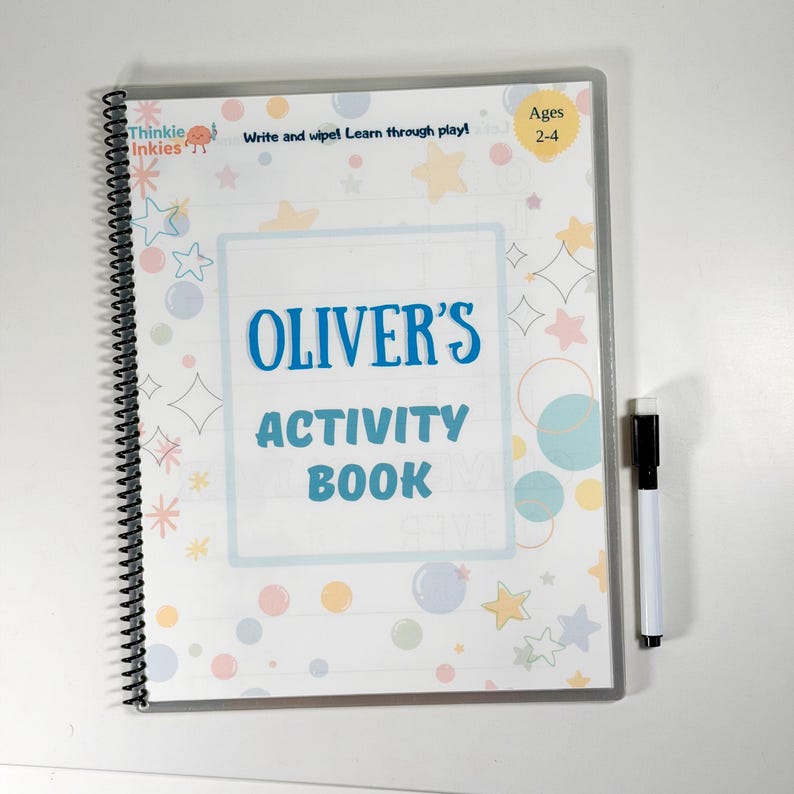
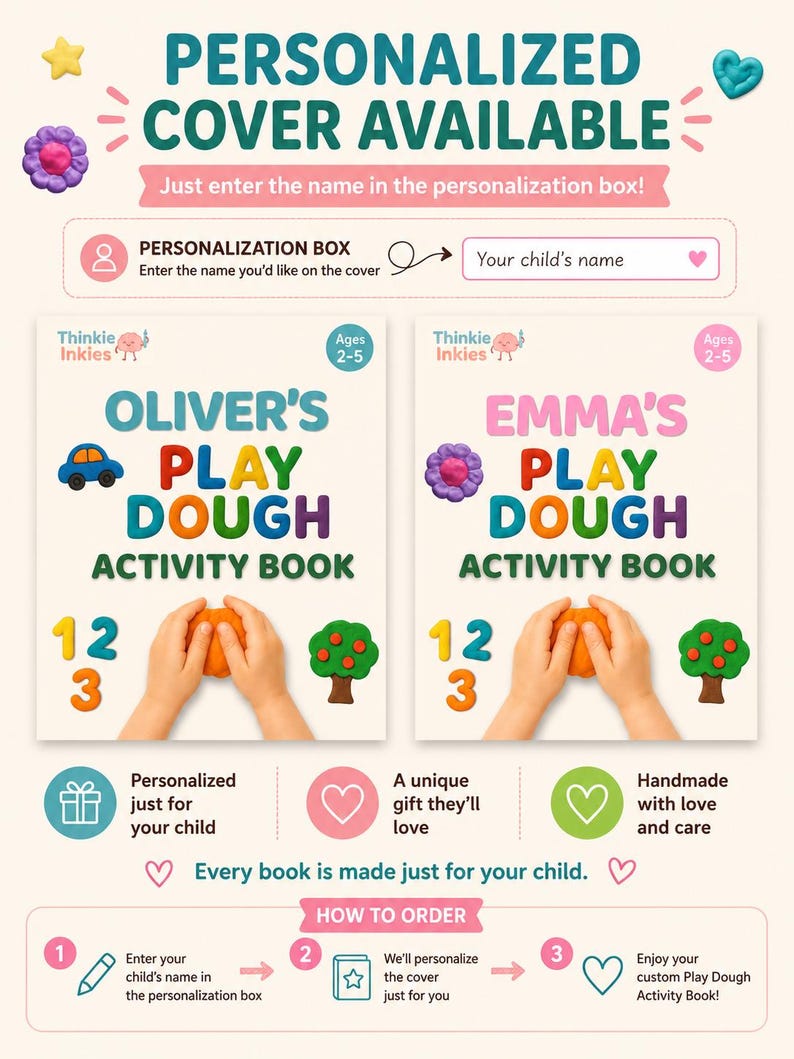
The ThinkieInkies play dough book includes number-related activities; inspect the page previews to see whether its format suits your child. Supply your own suitable dough and follow the care guidance.
Do we need to work through every number? No. Revisit a small collection in several stories: plates for toys, spots on a pretend animal, or parcels for a delivery. Changing the story can be more useful than increasing the number.
Every child develops differently. Use age guidance, supervise activities and choose materials appropriate for your child and home.
Published by ThinkieInkies. General play ideas, not clinical advice. Product details are available in the linked product listings; general learning ideas are provided for inspiration and should be adapted to each child with adult supervision.