Play dough alphabet activities let a child explore a letter as something they can build and change. The dough might become a recognizable letter, a road, or a completely new creature. Keep that freedom available while offering a clear letter model nearby.
Use dough appropriate for the child's age, check ingredients for relevant allergies, and supervise. Dough is not food. Skip this material if the child is likely to eat it or dislikes touching it.
Choose one meaningful letter
Start with a letter from the child's name or a word they care about. Show a large, plain example on paper or a suitable mat. Talk about one visible feature, such as a long straight part or a curve.
You do not need to cover the alphabet in order. One letter explored in several ways can make a complete invitation.
Roll, bend, compare
Help the child roll a long piece of dough if they want assistance. Place it beside the letter rather than requiring it to fit perfectly on top. Ask which part could be made first.
For a letter with straight parts, try several short pieces. For a curve, bend one longer piece. Compare the child's construction with the model only as much as they find interesting. An imperfect shape can still start a useful conversation.
Try a letter repair shop
Build a letter yourself and gently separate one piece. Ask whether the child wants to repair it, turn it into another design, or give you directions. Keep the complete printed model visible.
This game gives the child a job without requiring them to start from a blank mat. If repair becomes frustrating, squash the dough together and make something unrelated.
Let a letter become part of a story
An M could be a pair of mountain peaks in a pretend landscape. A long curve might become a road before returning to a letter shape. Say when you are switching between the letter and the pretend object so the analogy does not become confusing.
Add language naturally: “You bent it,” “That piece is longer,” or “Where should this part go?” A question after every movement is unnecessary.
What benefit can you reasonably expect?
Rolling and shaping provide opportunities to use the hands and discuss shapes. NAEYC's Playdough Power describes varied possibilities for play, language, and hand use. That broad educational rationale does not establish that a particular dough book improves handwriting or speeds up reading.
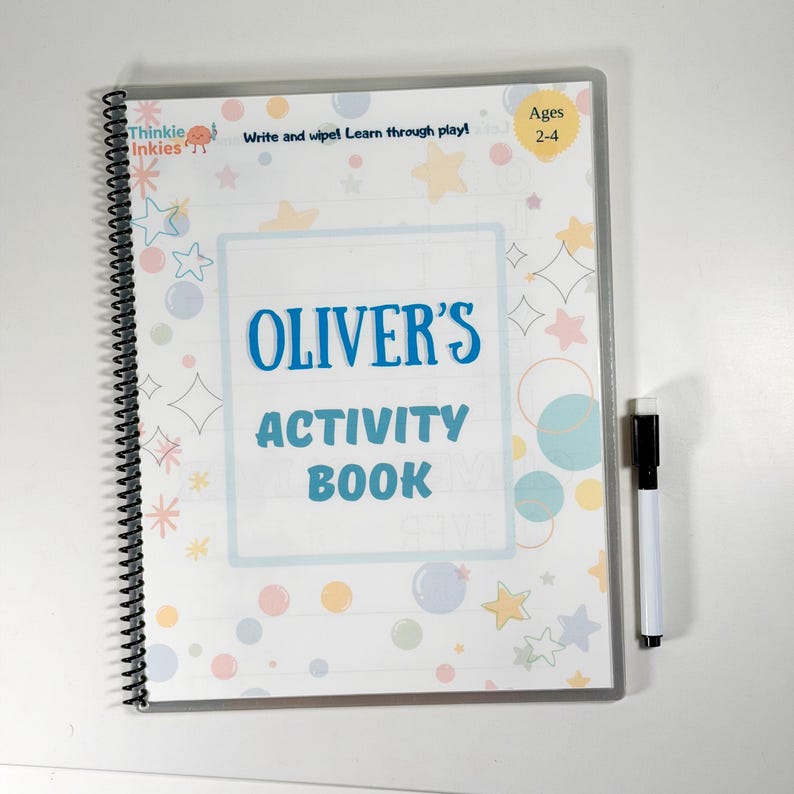
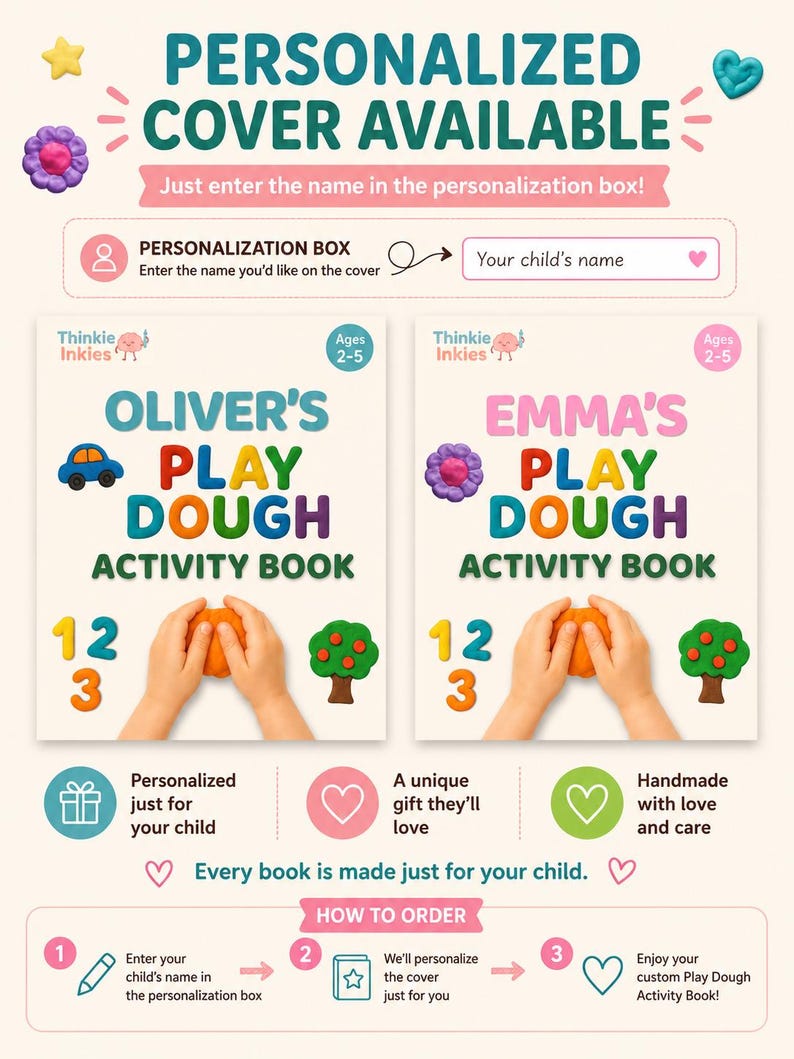
For a prepared format, preview the laminated play dough activity book. Play dough is not included. Follow the book's cleaning instructions after use.
If the child prefers quantity games, try play dough counting mats. If writing tools are the source of frustration, our alternatives to tracing offer other ways to participate.
Every child develops differently. Use age guidance, supervise activities and choose materials appropriate for your child and home.
Published by ThinkieInkies. General play ideas, not clinical advice. Product details are available in the linked product listings; general learning ideas are provided for inspiration and should be adapted to each child with adult supervision.