
Saying “one, two, three,” recognizing the printed symbol 3, and counting three objects are related but different tasks. If your child can do one and not another, choose an activity that makes the missing connection visible instead of repeating the same question more often.
You do not need a full set of number flashcards. A few large objects, paper, and an adult's attention are enough to begin.
Notice what the activity actually asks
Reciting the sequence: the child says number words in order, perhaps during a song.
Recognizing a numeral: the child notices or names a written symbol such as 2.
Counting a collection: the child pairs number words with objects and identifies how many are there.
Treat these as ways to understand a game, not as a diagnostic checklist. A child's performance can also change with interest, fatigue, language, or familiarity with the materials.
Make a number parking sign
Draw two parking spaces and place one suitable toy vehicle in each. Count the vehicles together, moving each once. Write 2 on a large paper sign and say, “This sign tells us there are two spaces.”
Let the child change the parking lot. If they add a third space, count again and make a new sign. You can write the numeral while the child directs; handwriting is not required to explore the amount.
Find a numeral in a useful place
Look for a familiar number on a calendar or a book page. Explain what it tells you in that setting. A page number shows a position, while a price or a house number serves a different purpose. You can simply say what the number is doing rather than suggesting all numbers describe a pile of objects.
Keep searches small. Finding one target in a crowded page can be enough, especially when the child is just beginning to notice print.
Pair a symbol with several representations
Show a large 3 beside three blocks. Later, place three drawn circles beside it. Another day, make three marks on a reusable surface. Vary the objects while keeping the amount small and clear.
If the child guesses, count together rather than turning the activity into repeated testing. For ways to keep track of each object, use our one-to-one counting games.
Where tracing fits
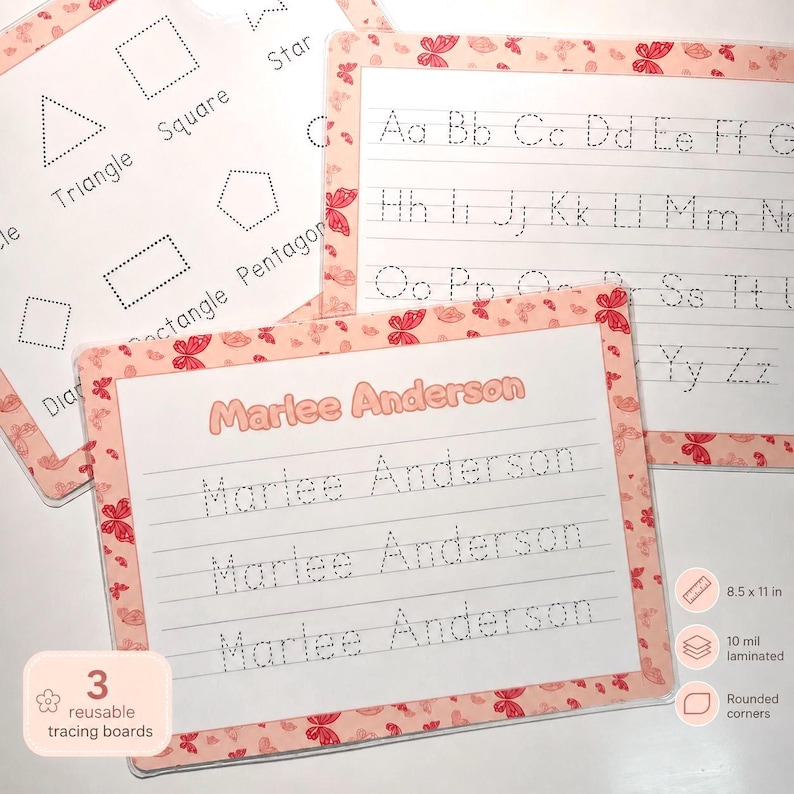
Tracing a numeral gives a child a chance to explore its shape. It does not demonstrate that the child understands the quantity. Pair optional tracing with a small collection they can count or compare.
The personalized tracing boards set is one reusable format to consider; check the current board options and examples before ordering. You can also use plain paper to make a numeral beside a counted group.
For a more tactile version, try play dough number-mat ideas. Keep the numeral, the objects, and the conversation connected, while allowing each skill to take its own time.
Every child develops differently. Use age guidance, supervise activities and choose materials appropriate for your child and home.
Published by ThinkieInkies. General play ideas, not clinical advice. Product details are available in the linked product listings; general learning ideas are provided for inspiration and should be adapted to each child with adult supervision.