
Independent play can mean that a child chooses what to do, begins a familiar activity, or solves a small problem without an adult directing every move. It does not have to mean being alone, and it does not remove the supervision a product requires.
With activity books, the most realistic first goal may be choosing a page and deciding how to explore it while an adult stays nearby.
Teach the setup before expecting independence
Show where the book belongs and how it opens. If it uses a marker, the adult should manage it according to the product's age and safety instructions. Demonstrate how to keep the surface steady and where finished materials go.
Repeat the setup together until it is familiar. A child cannot independently follow a routine that has only been explained in a long string of verbal instructions.
Start with a page the child already understands
Choose an activity they have enjoyed before. A new, complicated page can create repeated requests for help, which may look like reluctance to play independently when the real issue is uncertainty.
Ask, “Which part will you try?” Then wait. If the child invents a different safe use, consider following their idea. Independence includes making a choice that differs from the adult's plan.
Offer help in smaller amounts
When the child asks for help, first clarify the problem: “Is the page moving, or are you deciding where to start?” Fixing a sliding book is different from completing the task for them.
You can show one example, make space, or hold a corner of the page. Then give the child room to continue. Avoid withholding help as a test of whether they are capable enough.
Reduce the audience effect
Some children stop exploring when an adult comments on every action. Stay attentive but leave quiet gaps. Respond when the child invites you in, and describe what you notice without constant praise, correction, or questions.
If the child wants you to play, shared activity remains worthwhile. The aim is to expand choices gradually, not to make your presence undesirable.
Choose materials honestly
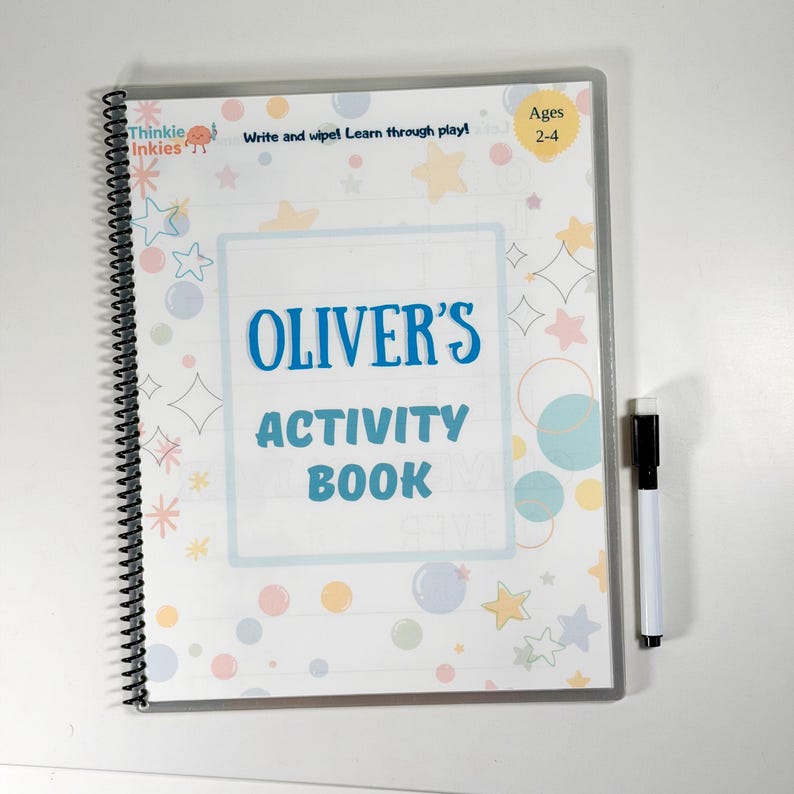
The personalized activity book is designed for supervised use. Consider it when its page format suits the child, not as a guarantee that they will occupy themselves for a particular number of minutes.
For an easy way to arrange choices, use our quiet-time basket plan. For clutter reduction across the week, try rotating a small set of activities.
What if my child calls me back immediately? Return, find out what they need, and make the next goal smaller. Choosing one activity or making the first mark can be the whole independent step today. There is no universal age-based target for how long a child should play without adult participation.
Every child develops differently. Use age guidance, supervise activities and choose materials appropriate for your child and home.
Published by ThinkieInkies. General play ideas, not clinical advice. Product details are available in the linked product listings; general learning ideas are provided for inspiration and should be adapted to each child with adult supervision.