Letter tracing is worth trying when a child wants to explore marks and can enjoy a small amount of guided drawing. A birthday alone does not tell you whether a tracing page will be a good fit. Start with the child's response, the size of the task, and the freedom to stop.
An age range on a workbook helps you shop. It is not a deadline for mastering its pages, and a child does not need to complete an alphabet workbook before enjoying books, stories, or pretend writing.
Look for interest before accuracy
Does your child ask what a written name says, copy your drawing, or enjoy making roads with a crayon? Those interests can provide an opening. Offer a large, simple mark and see what happens. Pointing, watching, and making an unrelated scribble are all acceptable ways to join.
Avoid turning readiness into a home test. NAEYC describes early writing as more than forming letters: children also explore what writing means and how it can communicate ideas. A neat traced letter is only one small piece of that picture. See its overview of emergent writing.
Try a three-step invitation
- Draw a wide road on paper. Move a finger along it together, without holding the child's hand in place.
- Offer a crayon and invite a second road. Let the child choose where it goes.
- If the child wants a letter, show one meaningful example, such as the first letter of their name.
The first attempt may last less than a minute. That is useful information about today's interest, not a failed lesson. Repeat another day if the child wants to return.
Make the page easier before making the session longer
A whole alphabet page can look like a large assignment. Cover the unused area with a sheet of paper and leave one letter visible. Choose generous letter sizes and a stable surface. Check that the child can sit or stand comfortably and that the page stays in place.
If managing a marker is the hard part, try finger tracing or draw beside the child. If the child enjoys free drawing but dislikes dotted lines, keep drawing. For more options, try our pre-writing line activities.
When to put tracing away
Stop if the activity becomes a struggle, the child reports discomfort, or you find yourself correcting every movement. Try a story, construction game, or pretend shop instead. Questions about pain, lost skills, or persistent difficulties deserve a conversation with the child's healthcare professional, rather than more worksheets.
Choosing an optional tool
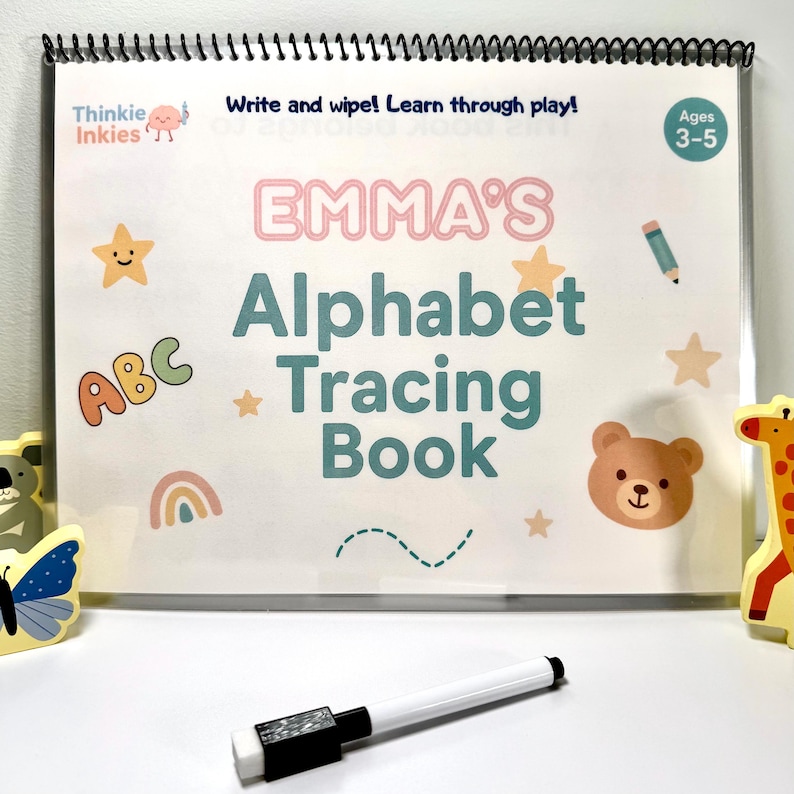
A personalized alphabet tracing book can provide a repeatable starting point for a child who already enjoys this kind of play. Preview the pages and check the current age, marker, and supervision guidance before ordering.
Does tracing teach independent writing? It offers practice following a model. Copying and making marks without that model are different experiences; our tracing-versus-copying guide explains how to offer both without rushing.
Every child develops differently. Use age guidance, supervise activities and choose materials appropriate for your child and home.
Published by ThinkieInkies. General play ideas, not clinical advice. Product details are available in the linked product listings; general learning ideas are provided for inspiration and should be adapted to each child with adult supervision.