
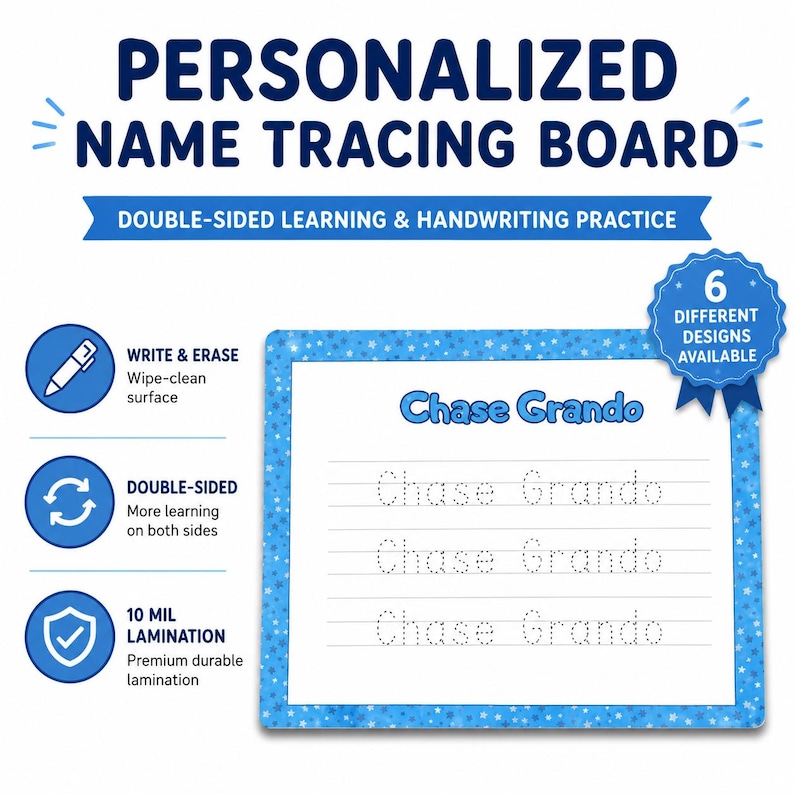
Tracing means making a mark along a visible path. Copying means looking at a model and making a separate version nearby. Both can appear in playful writing, but they ask the child to do different things. A tidy traced letter does not prove that the child can write it independently.
Instead of moving through a rigid ladder, offer a few ways to explore the same letter and notice which one the child chooses.
Compare the tasks on one sheet
Draw a large letter near the left side of a page. Leave generous blank space beside it. Invite the child to choose among three options: follow your letter with a finger, trace it with a suitable drawing tool, or make a new version in the blank space.
The copied version might be larger, rotated, incomplete, or mixed with other marks. Describe the attempt rather than giving a score: “You made a tall line and added a curve.” Do not erase it simply because it differs from the model.
Why a child may trace happily but resist copying
A blank area offers less information about where to begin. The child also has to look between the example and their own work. It may feel like a different activity even when an adult sees the same letter.
Reduce the jump. Put the model close to the blank space, show one slow example, or let the child make only the first part. You can also return to a pre-writing path when letters stop being enjoyable.
Try a letter postcard
Fold a sheet into a pretend postcard. On one side, draw a picture together. On the other, add a name label or a single initial for the recipient.
Ask whether the child wants a model, wants you to write while they watch, or wants to make their own marks. The postcard gives the writing a destination. It also makes room for a drawing to carry most of the message.
Read the finished message back with the child's permission. If they describe a story that the marks do not conventionally spell, you can record their words separately without replacing their contribution.
Use reusable tools alongside blank paper
A name tracing board can supply a familiar model. Place paper next to it so copying or drawing is available too. Follow the board's marker instructions; a tool suitable for paper may not suit a reusable surface.
The existing name-tracing routine explains a brief guided session. This guide adds a separate opportunity to make marks outside the tracing path.
Keep progress broader than neatness
Notice when the child asks for a model, explains their message, chooses a starting point, or returns to an unfinished drawing. These observations can help you plan another invitation without turning home practice into an assessment.
Should we stop tracing once copying appears? Not necessarily. Let both remain available if the child enjoys them. Keep room for free drawing, stories, and meaningful writing so one format does not become the whole experience.
Every child develops differently. Use age guidance, supervise activities and choose materials appropriate for your child and home.
Published by ThinkieInkies. General play ideas, not clinical advice. Product details are available in the linked product listings; general learning ideas are provided for inspiration and should be adapted to each child with adult supervision.