Pretend-play writing gives children a reason to make marks: someone needs a ticket, a message, a menu, or a map. The finished page does not have to contain conventional words to become part of the game.
Set out a little paper and age-appropriate drawing tools. Join the story as another player, then offer writing when it helps the play move forward.
A restaurant that needs a menu
Ask what the pretend restaurant serves. The child can draw the dishes while you write the names they dictate. Leave spaces for their own marks rather than filling every area with adult handwriting.
When a customer arrives, use the menu to choose. Add an order slip only if the child wants one. The menu matters because people actually refer to it during the game.
A bus that needs tickets
Arrange a few chairs or cushions safely to make a pretend bus. Draw a destination on a large paper ticket. The child can add a symbol, an initial, or a mark that means the ticket has been checked.
Change destinations when the story changes. A zoo ticket and a moon ticket can look different without being formally assessed. Keep small scraps away from younger siblings who mouth objects.
A delivery service with messages
Give a soft toy a simple problem: it wants to invite a friend to tea. Ask the child what the message should say. Write those words on a card and read them aloud. The child can add the recipient's name from a model or make a picture identifying the friend.
Deliver the card together. Then let the other toy reply. The exchange provides a reason to look at the marks again, beyond showing an adult a finished page.
A map with one useful instruction
Draw two familiar places and let the child connect them. Add one sign, such as a name label for a house. Follow the child's map with a finger or a suitable toy.
Ask “Where next?” instead of correcting the route. If the child wants to add letters, offer a nearby model. Our tracing-versus-copying guide explains why copying a label differs from following a printed path.
How much should an adult write?
Enough to support the story, while leaving the child's contribution visible. Ask permission before adding conventional spelling beside their marks. You can write on a separate note if the child wants their own page left untouched.
NAEYC's home-writing guidance encourages meaningful everyday opportunities and adult modeling. These pretend scenarios apply that idea to a small home game; they are not a scripted literacy program.
Bring a familiar name into the story
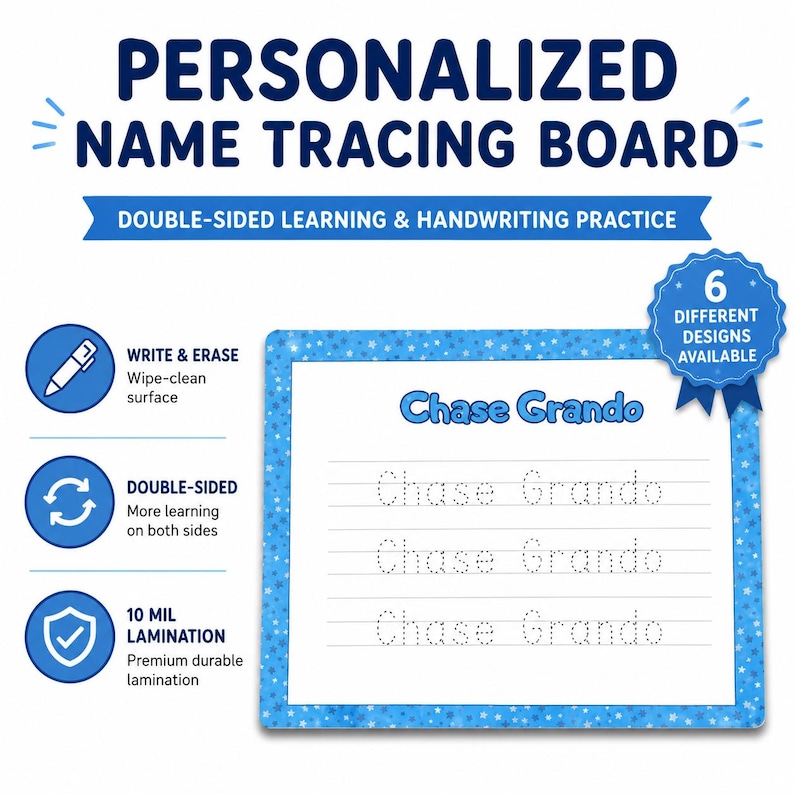
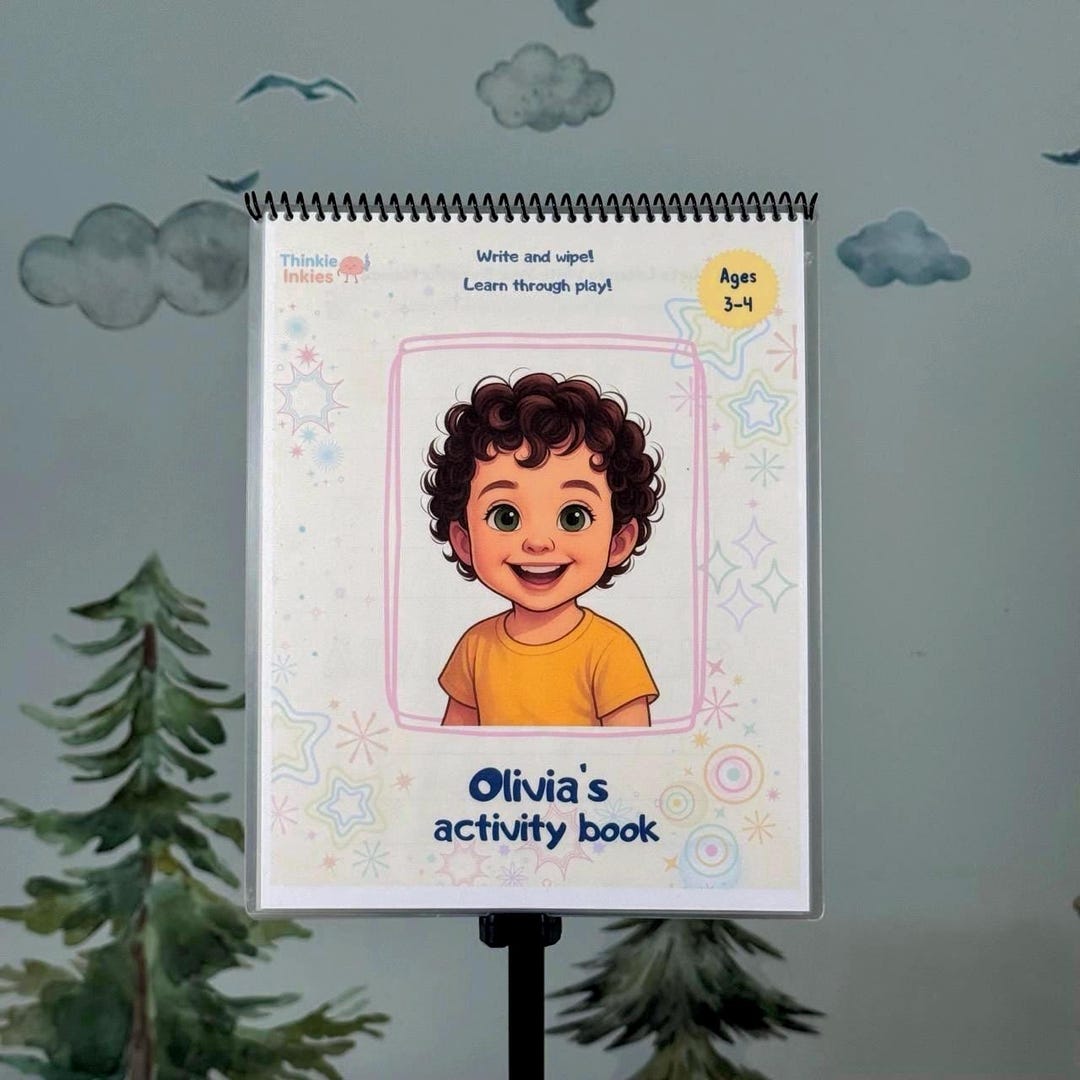
A personalized name writing workbook can be a reference when the child wants to sign a pretend form. Keep blank paper available for the actual ticket or message, and use the workbook only if it fits the moment.
For children who prefer observing print before producing it, start with recognizing their own name. The story can continue whether the child writes, draws, dictates, or asks you to help.
Every child develops differently. Use age guidance, supervise activities and choose materials appropriate for your child and home.
Published by ThinkieInkies. General play ideas, not clinical advice. Product details are available in the linked product listings; general learning ideas are provided for inspiration and should be adapted to each child with adult supervision.