A long name can turn a simple writing invitation into a surprisingly large task. If your child enjoys the beginning but stops halfway through, reduce the amount they are asked to write. You can keep the full name visible while accepting a much smaller attempt.
The goal is to make the name familiar and useful, not to make a child complete more letters than a friend with a shorter name.
Keep the model complete
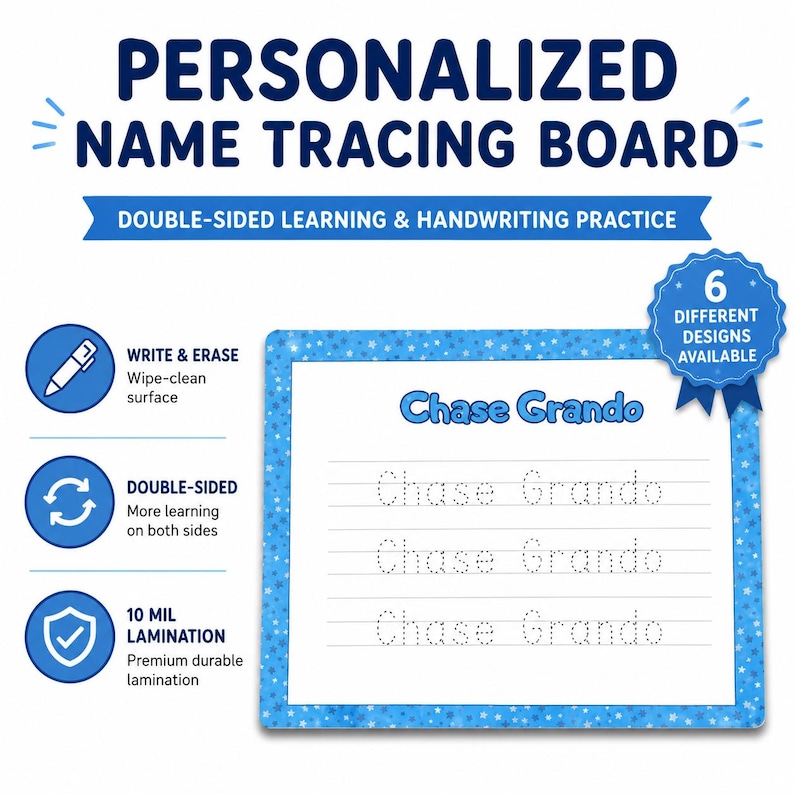
Write the full name clearly on a separate card. Check spelling, accents, spaces, and hyphens before creating repeated examples or ordering a personalized product. Do not simplify a culturally important name without the family's agreement.
If the family uses a nickname, decide which name belongs in this particular activity. A teacher may use a different form for classroom labels. Asking once prevents several competing models from appearing without explanation.
Offer three levels of participation
Find it. The child points to their written name or matches it to another copy. This lets them take part without writing. Our name recognition games offer more examples.
Start it. The child attempts the first letter, and the adult writes the rest with permission. Say what you are doing: “You started your name. Would you like me to finish this label?”
Choose a section. The child picks a few letters to explore today. Keep the full model nearby so a short practice section does not become a new spelling of the name.
Move between these options freely. A child who wrote several letters yesterday can still choose to point today.
Use a real purpose instead of a full row
Invite the child to label one drawing, sign a pretend delivery, or mark a place at a family game. A single meaningful attempt can be more inviting than repeating the same long name across a page.
For example, set up a toy art show with one name label under each picture. Ask whether the child wants to make their label, dictate it, or watch you write. Each option preserves the connection between the child and the finished work.
Make space work for the name
Longer names need sufficient room. Check that a printable or custom page does not squeeze the letters so tightly that they are difficult to follow. Use a larger page or a separate model if needed. Smaller lettering is not a fair way to make a long name fit a preschool task.
With reusable materials, wipe between attempts rather than asking the child to squeeze another version below the first. See the write-and-wipe guide for care and setup.
Choosing a personalized workbook
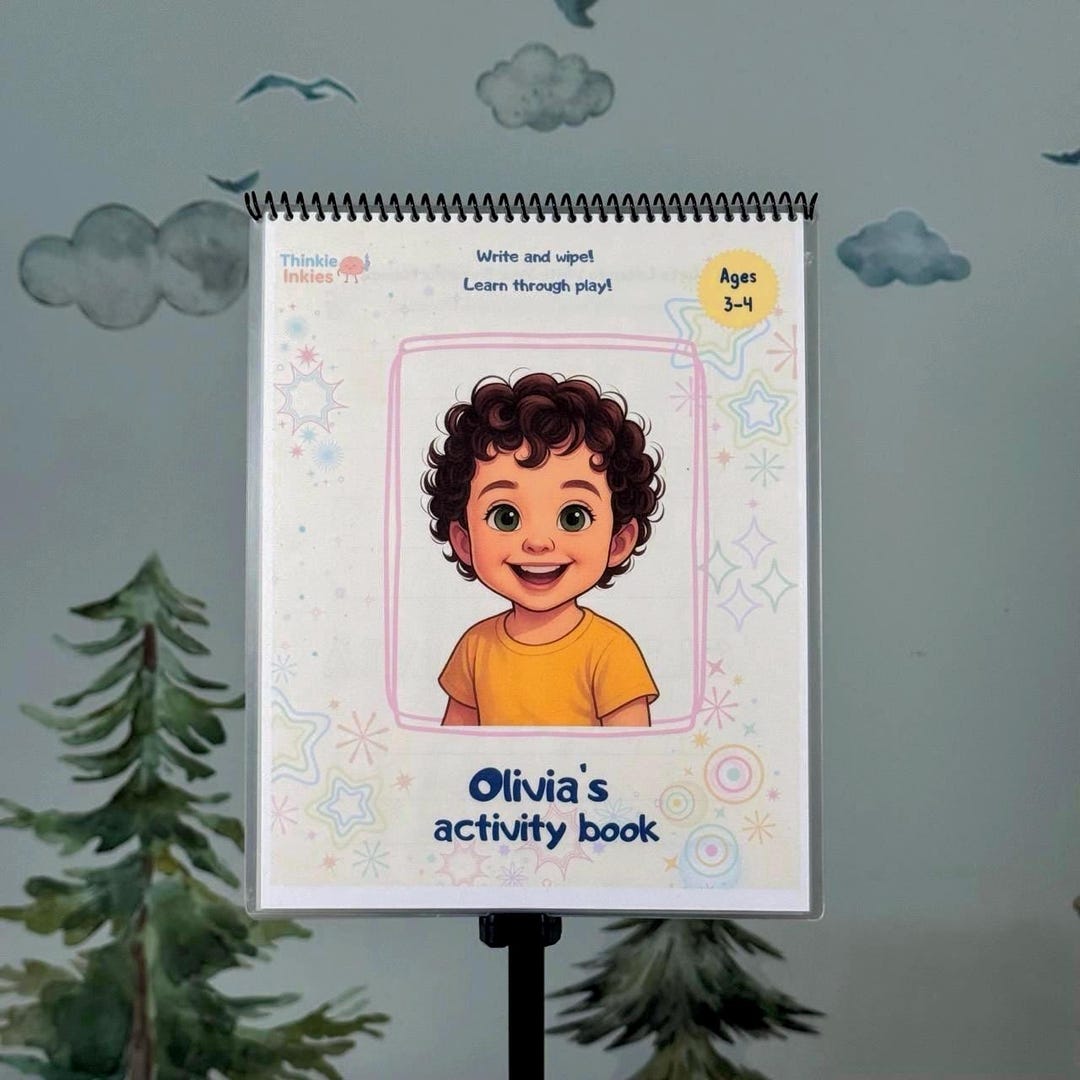
Review the personalized name writing workbook and ask the shop about layout if the name includes unusual length or characters. Only order after confirming the supported personalization.
Should a child finish the whole name every time? No. Keep the full spelling available, acknowledge the portion they chose, and return when the activity feels welcome again.
Every child develops differently. Use age guidance, supervise activities and choose materials appropriate for your child and home.
Published by ThinkieInkies. General play ideas, not clinical advice. Product details are available in the linked product listings; general learning ideas are provided for inspiration and should be adapted to each child with adult supervision.