
Shape activities become more interesting when children can turn, build, and compare the shapes they see. Naming a triangle is one possibility. Noticing its corners or finding a different-looking triangle gives the conversation somewhere else to go.
Use large paper shapes or age-appropriate blocks. Adults should prepare cutouts and supervise materials, especially around children who still mouth objects.
Start with a shape you can change
Cut several large triangles from paper: one tall, one wide, and one with unequal sides. Place them together and turn one so its point faces sideways.
Ask what the pieces have in common. Count the three sides and three corners together if the child is interested. Explain that turning a triangle does not turn it into a different kind of shape. Do not require the child to repeat a formal definition.
This is more useful than showing only one upright example and expecting a child to recognize every variation later.
Build a picture and talk about the choices
Offer a few rectangles, circles, and triangles on a tray. Invite the child to arrange a vehicle, animal, or entirely invented picture. Keep the shapes loose so the design can change.
Ask a practical question: “Which piece could make a roof?” If the child uses a circle, explore their design rather than replacing it. You can describe the chosen shape without deciding what the picture must look like.
Make a shape hunt specific
Search for a circular face, a rectangular outline, or a triangular sign. A ball is a three-dimensional object, so say that it is round rather than calling the whole ball a flat circle. A box has faces whose outlines may look rectangular.
You do not need to teach all the vocabulary at once. Simply make the description match what you are pointing to, and let the child choose the next object to investigate.
Sort by a feature instead of a name
Try “has corners” and “has no corners.” Later, sort by the number of sides. Keep one clear rule for the game, then announce when you change it.
If a child groups pieces by color instead, name their rule: “You put the blue ones together.” Then show how your shape rule would create a different arrangement. This turns a mismatch into a useful comparison.
Add drawing only if it helps
The child can trace a large paper shape, draw around a block with help, or make a new shape on blank paper. Matching, describing, and drawing need not all happen in one session.
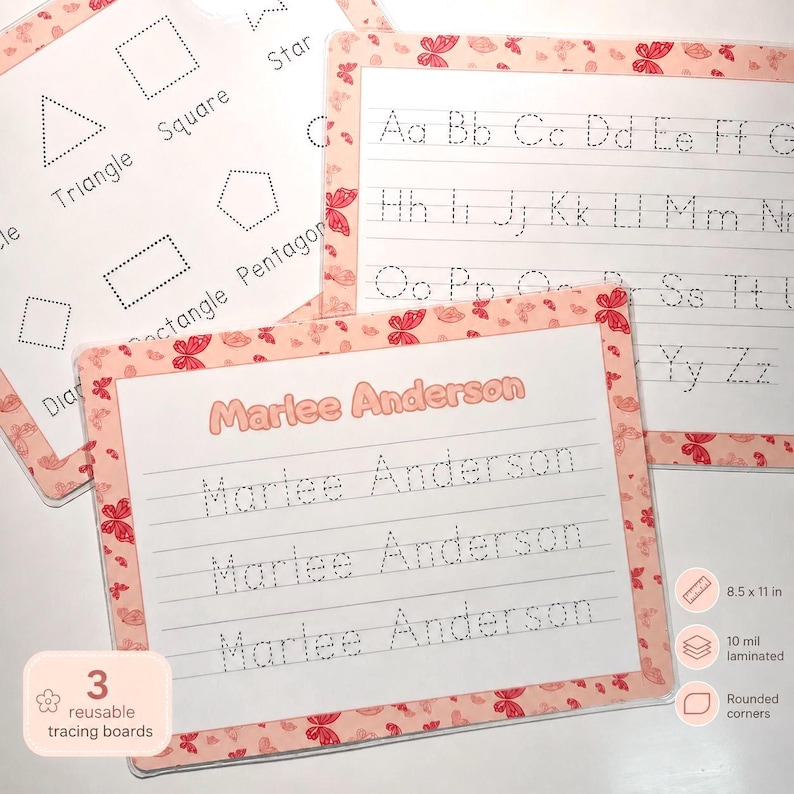
For reusable options, preview the tracing boards set and check which shapes appear. The product is an optional surface, not a substitute for exploring real objects.
Try color sorting when the child enjoys grouping, or simple pattern games when they want to arrange shapes in an order. Keep the next challenge tied to their curiosity rather than the number of shapes they can name.
Every child develops differently. Use age guidance, supervise activities and choose materials appropriate for your child and home.
Published by ThinkieInkies. General play ideas, not clinical advice. Product details are available in the linked product listings; general learning ideas are provided for inspiration and should be adapted to each child with adult supervision.