
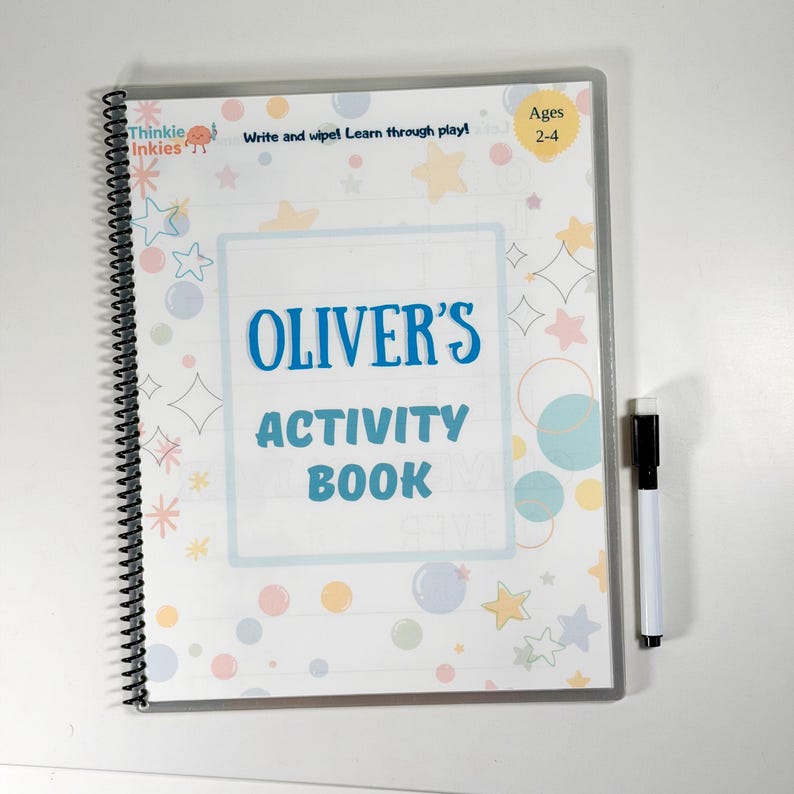
An educational gift from a grandparent can be a reason to share a story, make something, or revisit a familiar game. The gift does not have to teach a new skill immediately to be meaningful.
Start by asking the caregiver what the child currently enjoys and what the family can easily use. That small conversation is often more valuable than comparing long lists of developmental promises.
Choose an activity you would enjoy sharing
If you like telling stories, choose a picture-led resource. If you enjoy drawing, a simple writing or tracing format may give you a shared starting point. If making things is your favorite, consider appropriate hands-on materials with the caregiver's agreement.
A personalized activity book can be one option, but preview the actual pages. A book should match what you and the child will do together, not just the name on the cover.
Add a small invitation to the gift
Suggest a concrete first activity: invent a road to Grandma's house, count places for a pretend picnic, or make a sign for a favorite toy. Leave room for the child to change the idea.
Do not present the gift with a requirement to finish pages before the next visit. A present can remain an invitation rather than becoming homework monitored by a relative.
Make occasional visits easier
Keep one familiar activity at your home if the family agrees. Store it with any necessary adult-managed supplies so it is ready when the child arrives.
For families who travel, choose something that fits the actual bag and space. Our busy-bag checklist helps compare portability without assuming every activity belongs in every travel setting.
Include family language and stories
Talk about a picture using the languages you use comfortably. Explain a family word, tell a short memory, or describe a place the child knows through relatives.
The activity can begin a conversation about the family without requiring the child to perform vocabulary knowledge. Our bilingual home-literacy guide offers more ways to connect language with relationships.
Check personalization and timing
Ask for the exact name spelling before ordering. Review current processing and shipping estimates, especially if the gift needs to arrive before a visit. A personalized item may need time to be made as well as delivered.
Read the age and supervision guidance and check whether accessories are included. Do not assume the caregiver will already own every supply pictured in a listing.
What if the child wants to play with the box instead? Join that interest. The shared experience does not become less worthwhile because it starts somewhere unexpected. You can introduce the gift later, when the child is curious, without asking them to demonstrate that it was a good purchase.
Every child develops differently. Use age guidance, supervise activities and choose materials appropriate for your child and home.
Published by ThinkieInkies. General play ideas, not clinical advice. Product details are available in the linked product listings; general learning ideas are provided for inspiration and should be adapted to each child with adult supervision.