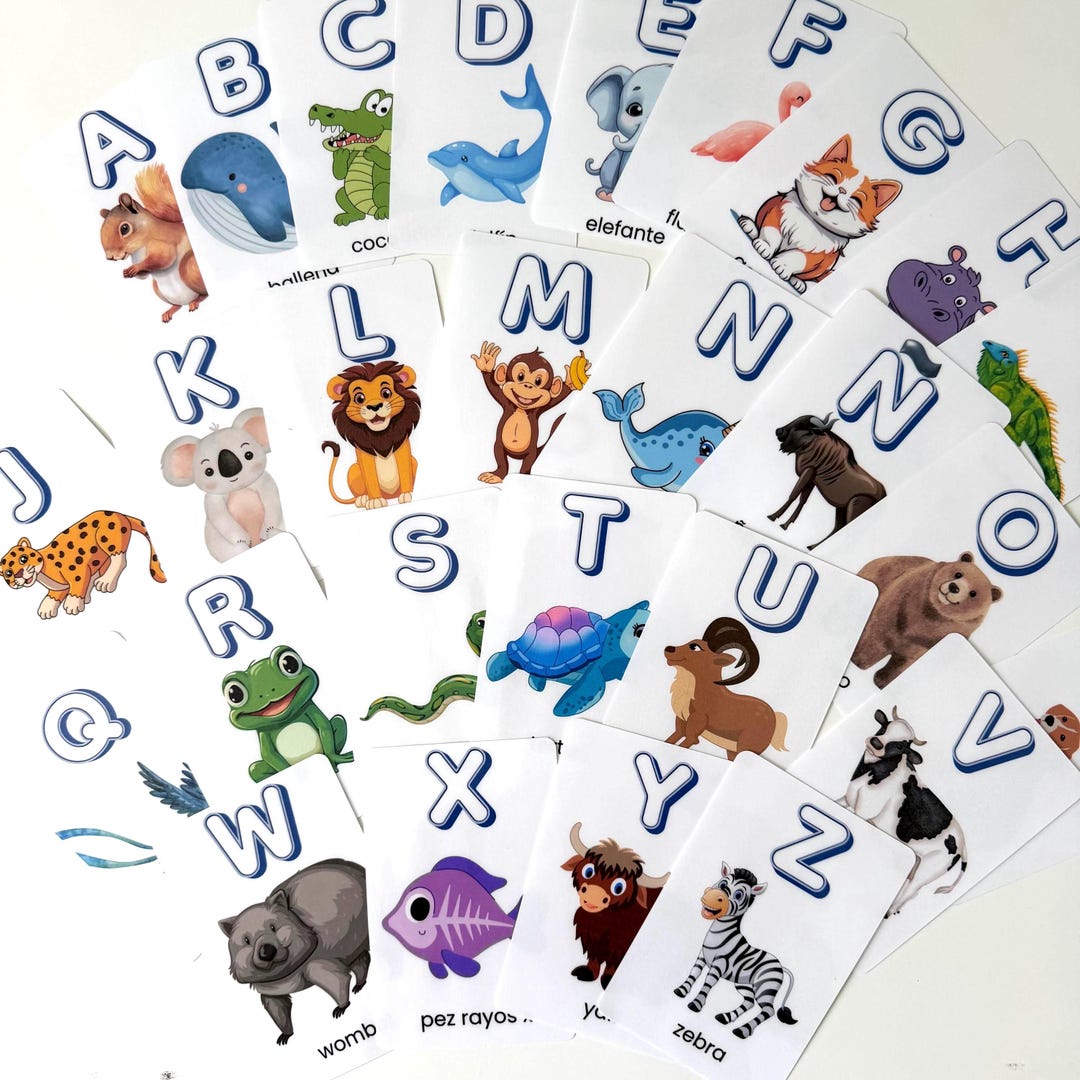
Spanish alphabet flashcards can start a short game about letters and pictures. They become more useful when an adult connects the card to a word, a story, or a real conversation. Naming a card is not the same as learning to use Spanish in daily life.
Choose a few cards and use pronunciations you know. If you are unsure, check with a fluent speaker or a reliable language resource instead of guessing from English spelling.
Match before quizzing
Place two different letter cards on the table and draw a matching letter on a large sheet of paper. Invite the child to find the match. Keep the example visible so they can compare rather than rely on memory.
Start with similar letter styles. Decorative typefaces can make a simple matching task unnecessarily difficult.
Let the picture start a conversation
Name the animal or object on a card in Spanish. Add one short, accurate phrase you can use comfortably. Invite the child to point, make an action, or contribute a word in either language.
There is no need to withhold the game until the child answers only in Spanish. The aim is a shared opportunity to hear and use language.
Find a letter in a meaningful word
Show the first letter of the child's name if it appears in the set. Look for it in another familiar word. Explain that the same letter can occur in different words without turning the activity into a pronunciation lesson for every possible context.
Include Ñ as its own letter when using Spanish alphabet materials. Do not treat it as a decorative version of N.
Invent a two-card story
Choose two picture cards and imagine what the characters might do together. An adult can tell a short story, then pause for the child's idea. Use the language that lets you communicate warmly and accurately, adding familiar Spanish words where they fit.
For a broader household approach, see our bilingual literacy routine. ASHA's multilingual learning guidance emphasizes ongoing opportunities to use the family's languages; a card deck is only one possible prop.
Choose printed or printable cards
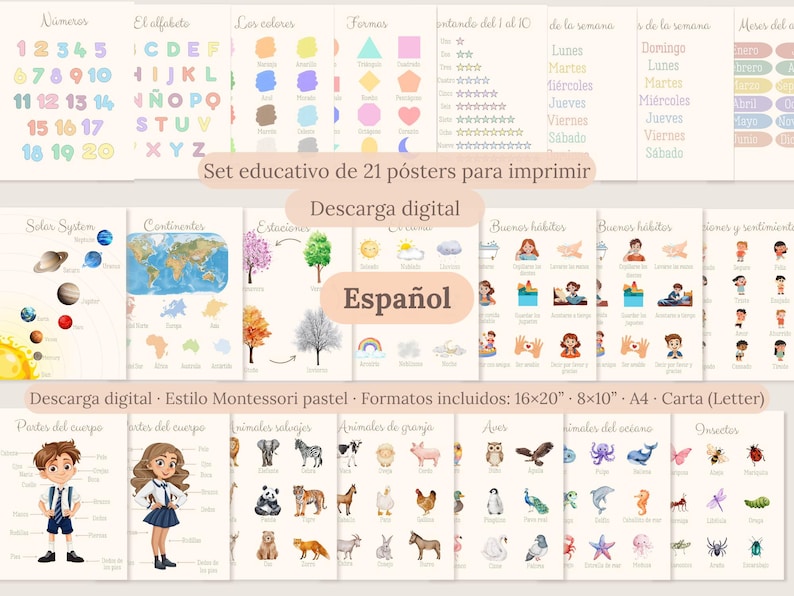
The ready-made Spanish alphabet cards offer a physical format. The printable Spanish set requires printing and adult preparation. Compare the current files, materials, and age guidance on the individual listings rather than assuming the formats are identical.
Use cards under appropriate supervision and keep damaged pieces or adult cutting tools out of play.
How many cards should we use? Enough for a clear invitation, often just two or three to begin. Add more when the child requests a bigger game. Our flashcards-versus-conversation guide explains how to move beyond repeated labeling without discarding a useful set of cards.
Every child develops differently. Use age guidance, supervise activities and choose materials appropriate for your child and home.
Published by ThinkieInkies. General play ideas, not clinical advice. Product details are available in the linked product listings; general learning ideas are provided for inspiration and should be adapted to each child with adult supervision.