Treat a poster as a conversation prompt, not a curriculum
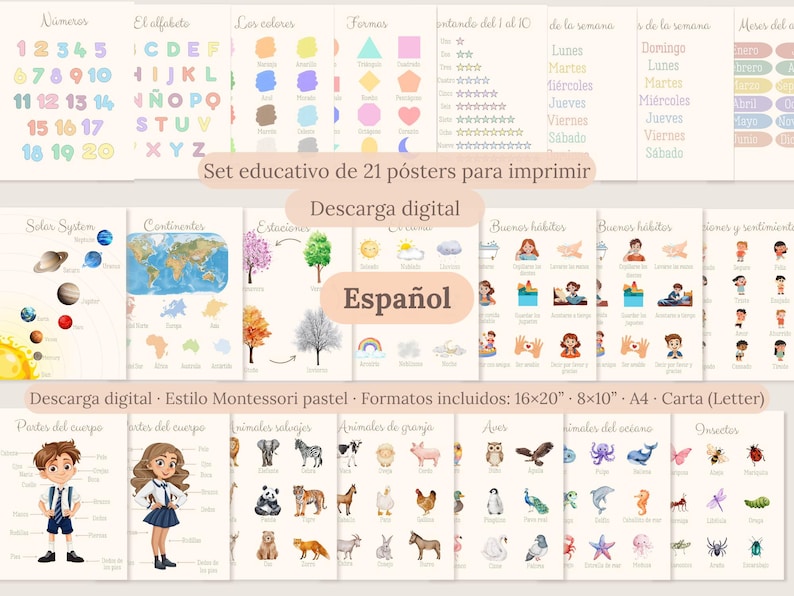
A Spanish educational poster becomes useful when someone talks, points, notices, or plays with it. Hanging twenty-one topics at once may create a colorful wall, but it does not automatically create a bilingual routine. Start with one poster connected to something already happening: colors beside an art table, weather near the place where shoes are chosen, or feelings near a quiet family space. The picture gives the conversation a shared reference without requiring a formal lesson.
The aim is not to test how many words a preschooler can recall. An adult can say one word, connect it to an object or action, and leave space for any response: pointing, repeating, answering in another language, moving, or simply looking. Families have different relationships with Spanish, from native speakers to learners using trusted resources. Use pronunciation and vocabulary consistent with the speakers, teachers, or materials your family relies on, and welcome regional word choices rather than treating one poster as the only correct version.
Choose one small theme for the week
Select a theme that can appear naturally several times. Colors, numbers one to five, weather, body parts, emotions, animals, and daily habits all offer easy real-world connections. Keep one poster visible and store the rest, or display a small pair that clearly belongs together. A focused selection makes it easier for the adult to remember the words and for the child to revisit the same pictures without searching across a crowded wall.
Place the display where an adult and child can see it comfortably during the chosen routine, while keeping frames, glass, cords, adhesive pieces, and mounting hardware safely out of reach. The child does not need unrestricted access to the physical print for the activity to work. If the family uses a tablet or phone to preview a purchased file before printing, keep the interaction brief and adult-led; the routines below are designed around shared language, not prolonged screen use.
Use the same five-minute see, say, find, do routine
A repeatable sequence reduces preparation. Choose two or three pictures from the poster and finish before attention fades. The adult can model every step at first, then let the child choose a picture or action on later days. There is no need to complete a full row or move through topics in order.
- See: point to one picture together and pause long enough to notice its shape, color, or expression.
- Say: name it once in Spanish, then use it in a short phrase that feels natural for your household.
- Find: look for a matching object, color, body part, number, or action in the immediate room.
- Do: act out the word, count a few items, make a face, or place an object near the matching picture.
- Close: repeat one favorite word and name the everyday moment when you might notice it again.
Connect poster topics to routines already in the day
Use the weather poster while choosing a coat, the colors poster while sorting laundry, or the numbers poster while placing fruit on a plate. A body-parts poster can prompt a simple movement game: touch a knee, raise a hand, or turn your head after the adult models the phrase. With an emotions poster, the adult can describe the illustrated face without insisting that the child label a personal feeling. This keeps the picture discussion optional and avoids using a poster as a demand for disclosure.
Animal and nature posters work well with books, toy animals, or a walk outside. Choose one image, say its Spanish word, and notice one visible feature or movement. For days and months, focus on the word relevant today instead of reciting an entire sequence. Good-habits topics can support a real action such as putting away a book, but the visual should remain a reminder, not a reward chart or a measure of the child’s character.
Make room for both languages without turning every turn into a quiz
In a bilingual household, a child may understand a Spanish word and answer in another language. That response still shows participation in the conversation. The adult can acknowledge the meaning and restate the Spanish word naturally rather than requiring an immediate correction. For example, after a child points to the sun and says “sun,” the adult might respond, “Sí, el sol. El sol está aquí.” Keep phrases within the adult’s own comfort and use a trusted speaker or reference when unsure.
Avoid rapid-fire prompts such as “What is this?” across an entire poster. Mix questions with comments, choices, and models: “I see rojo,” “Would you choose el gato or el perro?” or “Let’s find tres blocks.” Songs, family stories, and books can add living language around the same theme, provided the family has permission to use the material. A poster is a visual anchor within that interaction, not evidence that a child should remember vocabulary on a schedule.
Rotate slowly and notice which prompts invite participation
Keep a theme for several days or longer if it continues to invite conversation. Change only one part of the routine at a time: keep the same poster and choose new pictures, or keep the same five steps and introduce a new topic. If the child consistently walks away, shorten the activity, move it to a more relevant moment, or pause it. Repetition can feel reassuring, but participation should remain an invitation rather than a performance.
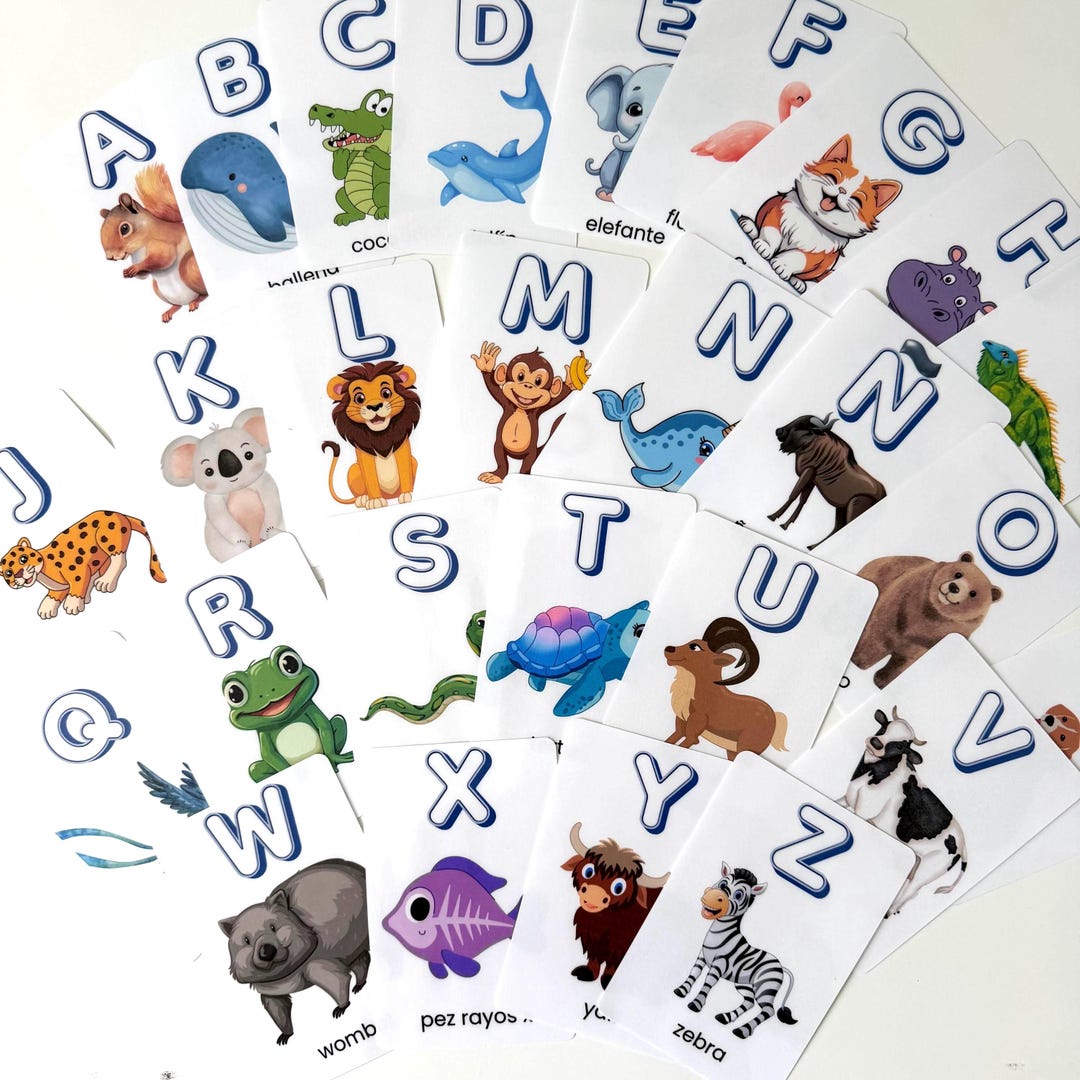
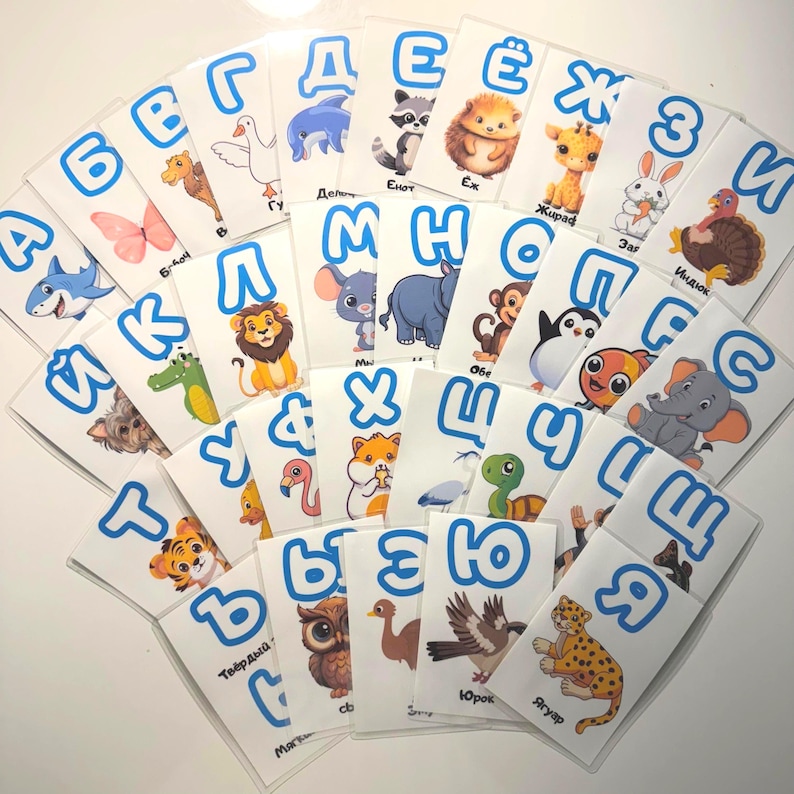
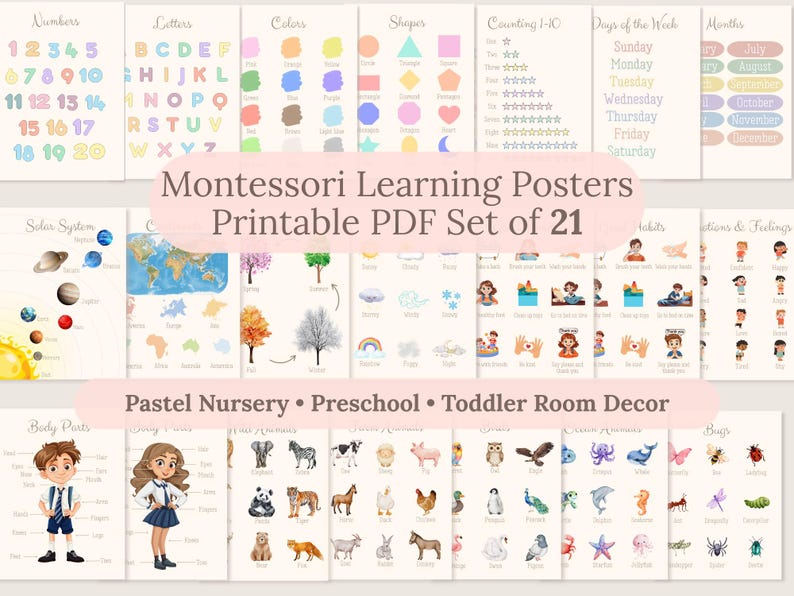
The Spanish poster set contains multiple early-learning themes, so families can build a long rotation without displaying everything together. The educational poster printing guide covers file size, paper, scaling, and display preparation; this guide stays focused on what to do after a suitable print is ready. Families exploring another writing system can adapt the same small-set principle to printable Russian alphabet flashcards, while recognizing that Cyrillic letter work requires its own accurate language references and routines.
Every child develops differently. Use age guidance, supervise activities and choose materials appropriate for your child and home.
Written and reviewed by the ThinkieInkies team behind these learning tools. Product details are available in the linked product listings; general learning ideas are provided for inspiration and should be adapted to each child with adult supervision.