Prepare a small set before playing
The Russian alphabet contains 33 letters, but an alphabet game does not need to use all 33 at once. Begin with three to six cards whose letters appear in the learner’s name, family names, or familiar words. A smaller group makes turns quick and lets each card reappear often. Add new letters gradually while keeping one or two familiar cards in every round.
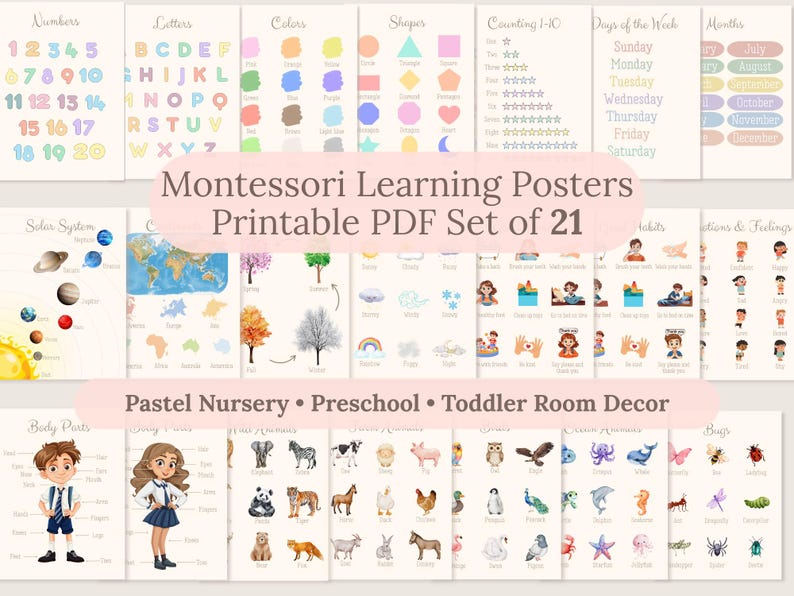
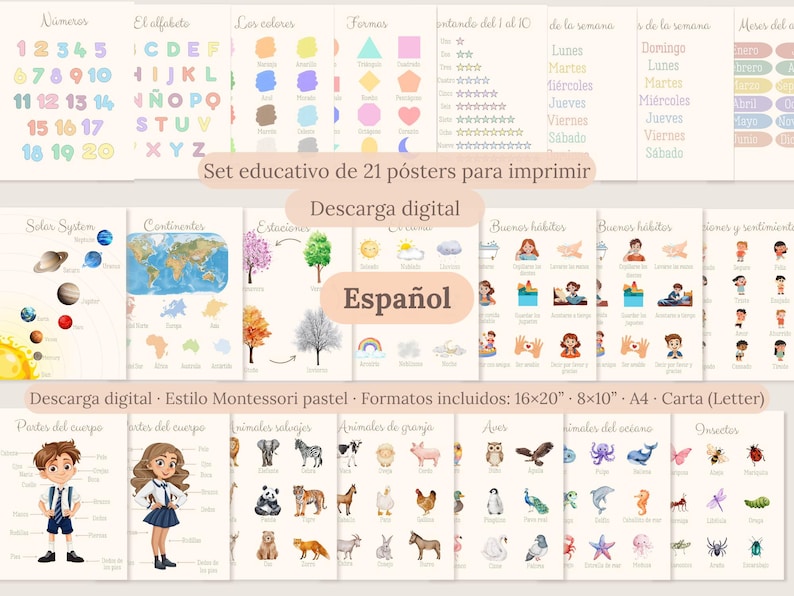
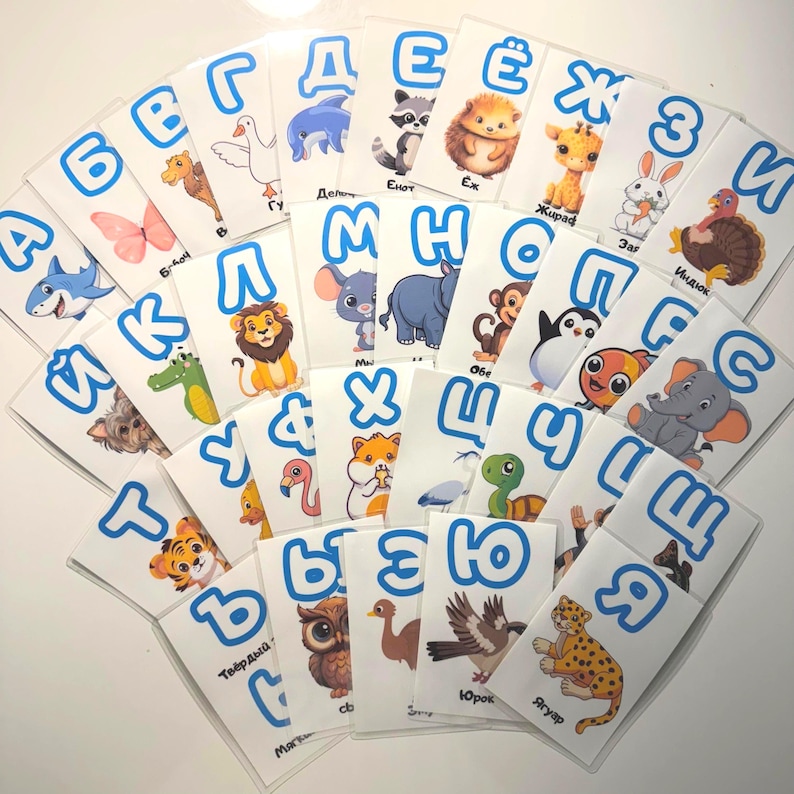
ThinkieInkies offers two clearly separate formats. The ready-made physical set pairs Cyrillic letters with animal illustrations and bilingual labels on laminated cards approximately 4 × 6 inches. The printable product is an instant PDF with 33 illustrated animal cards for an adult to print, cut, and optionally laminate. Check the selected product page before ordering so the delivery format and included accessories match your plan.
Games one and two: find the letter and make a match
For Find the Letter, place three cards face up and say one letter name or sound used in your learning approach. The player points to the card, then becomes the caller for the next turn. Avoid adding speed until everyone understands the cards. For a matching game, choose one card and look for the same letter on a Russian-language poster, book page, label, or another approved learning resource.
A match can mean the identical Cyrillic shape, a card connected to the same letter on an alphabet display, or an animal card paired with a familiar spoken word that begins with that letter in the language approach your family uses. Decide the rule before the round. If a learner confuses two shapes, place the cards side by side and describe one visible difference without labeling the attempt as careless. The goal is repeated noticing, not catching mistakes.
Games three and four: name hunt and room hunt
For Name Hunt, select the letters in a person’s name and mix in two extras. Arrange the needed cards in order, say the name, then scramble and rebuild it with a model nearby. Longer names can begin with initials or the first two letters. Family names give the activity a meaningful reason and allow bilingual households to compare how a name looks across writing systems.
For Room Hunt, choose one flashcard and search printed materials for the same Cyrillic letter. Suitable places might include a Russian-language book, a labeled family photo, or packaging already in the home. Do not expect every sound or word connection to be simple; the first purpose is visual recognition. End after three successful sightings and leave the card beside one example for later conversation.
Games five and six: sort the shapes and finish the path
For Shape Sort, invite the learner to make informal groups: letters with a circle, letters with a tall straight line, or letters that look similar to a known Latin character. These are visual observations, not formal grammatical categories, so a card can belong in more than one group. Discussing the reason for a choice is more useful than finding one official answer.
For Finish the Path, place five cards in a line leading to a toy or book. Move a counter one step after identifying, matching, or simply repeating the letter on the next card. Keep the game cooperative by working toward a shared destination. Use a large counter suitable for the player, supervise the materials, and remove anything that could present a small-parts concern.
Games seven and eight: animal clues and alphabet storyteller
For Animal Clues, choose among the illustrated cards and describe the pictured animal without showing it: where it might live, how it moves, or a visible feature. Reveal the card, name the animal in the language you are practicing, and notice its letter. Vocabulary can vary by region or translation, so use the words your family, teacher, or chosen learning resource consistently uses.
For Alphabet Storyteller, draw three cards and invent a tiny story that includes their animals or familiar words. The story may be one sentence, acted out with gestures, or told jointly by adult and child. The letters act as prompts rather than a test. Save a favorite combination for the next session, when the learner can retell, alter, or illustrate it.
Create a repeatable bilingual learning rhythm
Keep sessions short enough that putting the cards away feels easy. A simple rhythm is review two familiar letters, introduce one new letter, play one game, and finish by choosing a favorite card. Store the current set separately from the full deck so preparation takes seconds. Rotate illustrations or game rules when interest changes, not because a calendar says every letter must be covered.
Flashcards are most useful alongside real language: names, songs you are permitted to use, family conversation, and books chosen for the learner. They are not a replacement for interaction or a guarantee of fluency. If you choose the digital cards, the educational poster printing guide explains paper, scaling, trimming, and print-shop checks. The broader screen-free activity guide shows how card play can alternate with movement, making, and quiet picture talk.
Every child develops differently. Use age guidance, supervise activities and choose materials appropriate for your child and home.
Written and reviewed by the ThinkieInkies team behind these learning tools. Product details are available in the linked product listings; general learning ideas are provided for inspiration and should be adapted to each child with adult supervision.