
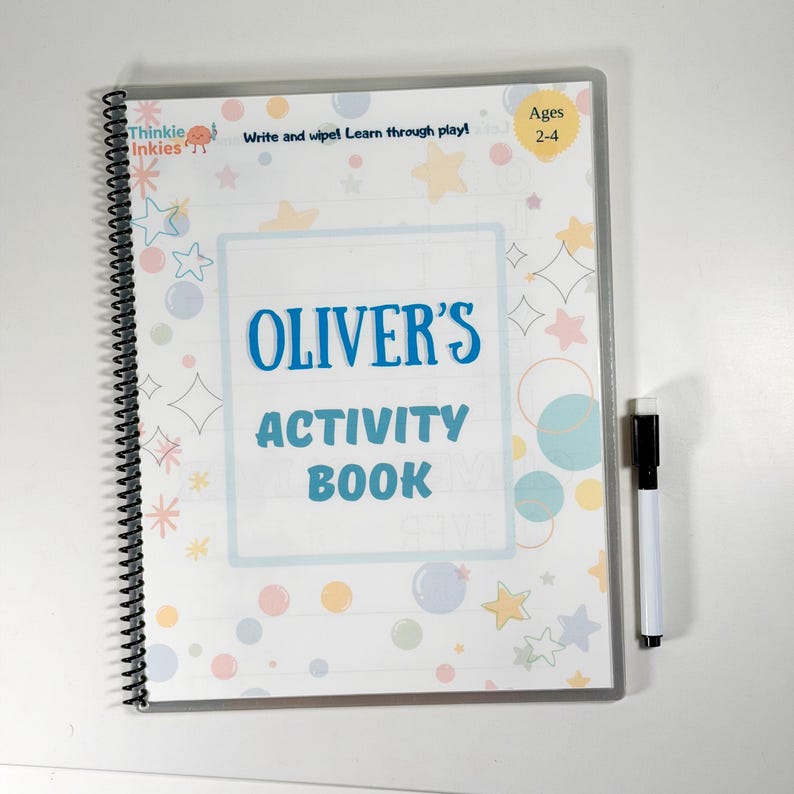
The best size for a printable tracing card is the size your child can comfortably see and use. A small format saves paper, but it can also make a path tighter and harder to follow. Test one page before printing an entire resource.
Read the product's file instructions first. Different downloads may supply different layouts, sizes, and permissions.
Open the correct file
Check whether the download contains full-page activities, a several-cards-per-sheet layout, or both. Use the supplied format closest to your goal rather than repeatedly resizing a finished page.
Preview the page orientation and paper size. If your printer offers scaling options, compare the preview with the intended dimensions. “Fit” can be helpful for avoiding clipping, but it may change the size of the activity.
Print one test in ordinary quality
Check the lines, margins, and any instructions. Make sure the path is clear enough to see and that nothing important is cut off. A test print prevents discovering the same problem after a whole stack has been prepared.
Offer the test as a drawing invitation before spending time on finishing. The child may prefer a larger route or a different activity altogether.
Compare formats by use
Full-page format: useful when the child wants broad movements or the printed path needs more space. It also leaves room for an adult to point without covering the whole activity.
Small-card format: useful for offering one short prompt at a time or organizing a compact supervised activity. Smaller does not automatically mean easier or more appropriate for younger children.
The ThinkieInkies tracing-card listing describes the current supplied formats. Check those details before planning your print run.
Decide whether reuse is necessary
Plain paper and a suitable crayon may be all you need. If you want a reusable surface, follow the instructions for the chosen sleeve or lamination material and check marker compatibility. An adult should handle cutting and finishing.
Inspect corners and edges before use, and remove damaged materials. Keep tools, offcuts, caps, and any small accessories away from children who should not access them.
Store by invitation rather than quantity
Group a few straight paths, curves, or picture routes in a labeled adult storage folder. Offer one or two cards instead of presenting the full set as work to finish.
Make a note of the size the child preferred so the next printing session is simpler. Our activity rotation system explains how to reuse that observation without building a detailed tracking project.
Can I use a poster-printing guide for cards? The basic checks overlap, but the activity's physical scale matters differently. Use the existing printing guide for file and printer basics, then use the child's actual interaction to choose the tracing-card size.
Every child develops differently. Use age guidance, supervise activities and choose materials appropriate for your child and home.
Published by ThinkieInkies. General play ideas, not clinical advice. Product details are available in the linked product listings; general learning ideas are provided for inspiration and should be adapted to each child with adult supervision.