Choose for the child’s real day, not an imagined playroom
The most useful educational gift is one a family can actually bring into its routine. Before shopping, ask where the child usually plays, whether the family prefers reusable or printable activities, and how much storage is available. A compact tracing board may suit a small kitchen table, while a play dough activity book may be better for a family that already enjoys sensory play. Practical fit matters more than the number of features on the product page.
Age labels are a starting point, not permission to ignore the product instructions. Check the maker’s current age guidance, materials, dimensions, and supervision notes before ordering. Consider whether the activity contains marker caps, small accessories, or other parts that require close adult involvement. Parents or caregivers know the child’s habits best, so give them enough information to decide when and how the gift should be used.
For children interested in names and familiar letters
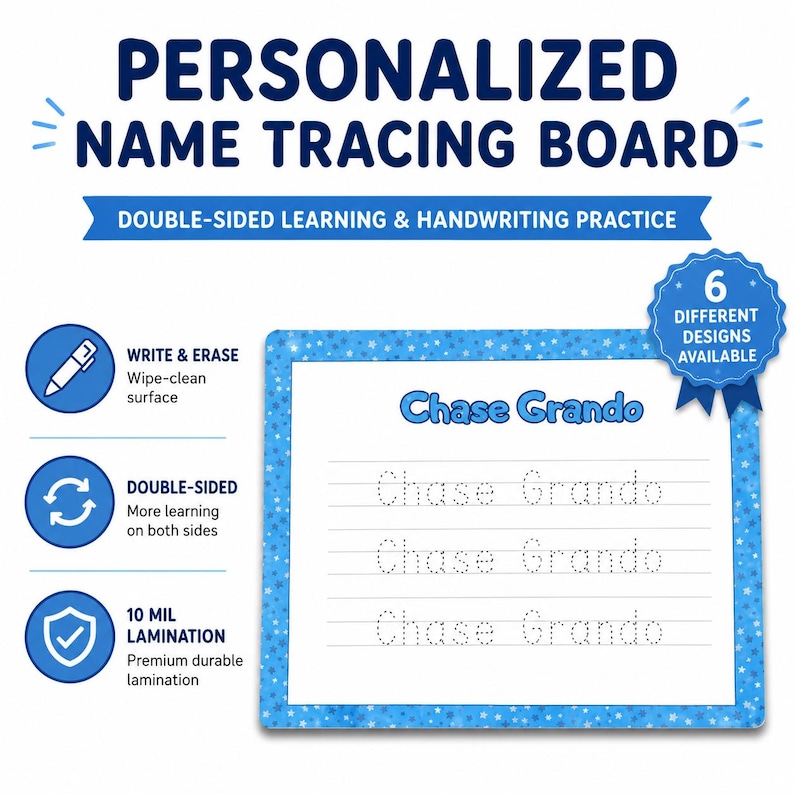
A personalized name tracing board turns a word the child already sees into a reusable activity. It is a focused choice for short table sessions and can also feel like a keepsake because the design is made around one name. Confirm the spelling, capitalization, and personalization details before submitting an order. If the child has a long or hyphenated name, review the listing examples or ask the seller how it will fit.
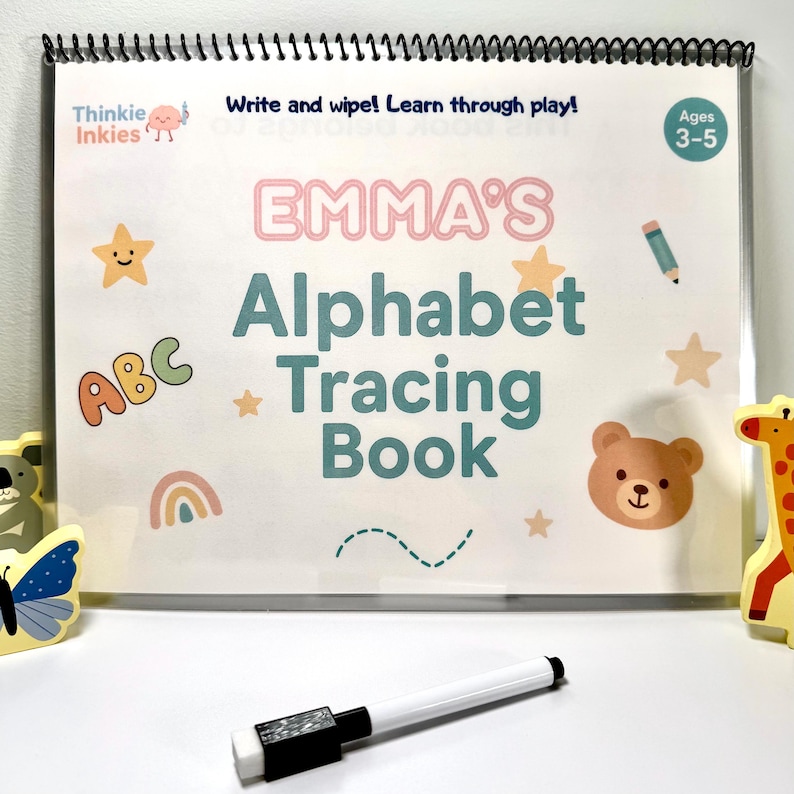
A personalized alphabet tracing book offers a wider set of pages and can grow into a rotation of letters rather than a single sequence. Choose a visual theme the child already enjoys, such as space or soft pastel artwork, rather than assuming one design suits everyone. Pair the gift with a note suggesting the simple name tracing routine, which emphasizes brief, low-pressure use instead of completing a whole book at once.
For children who prefer making and pretend play
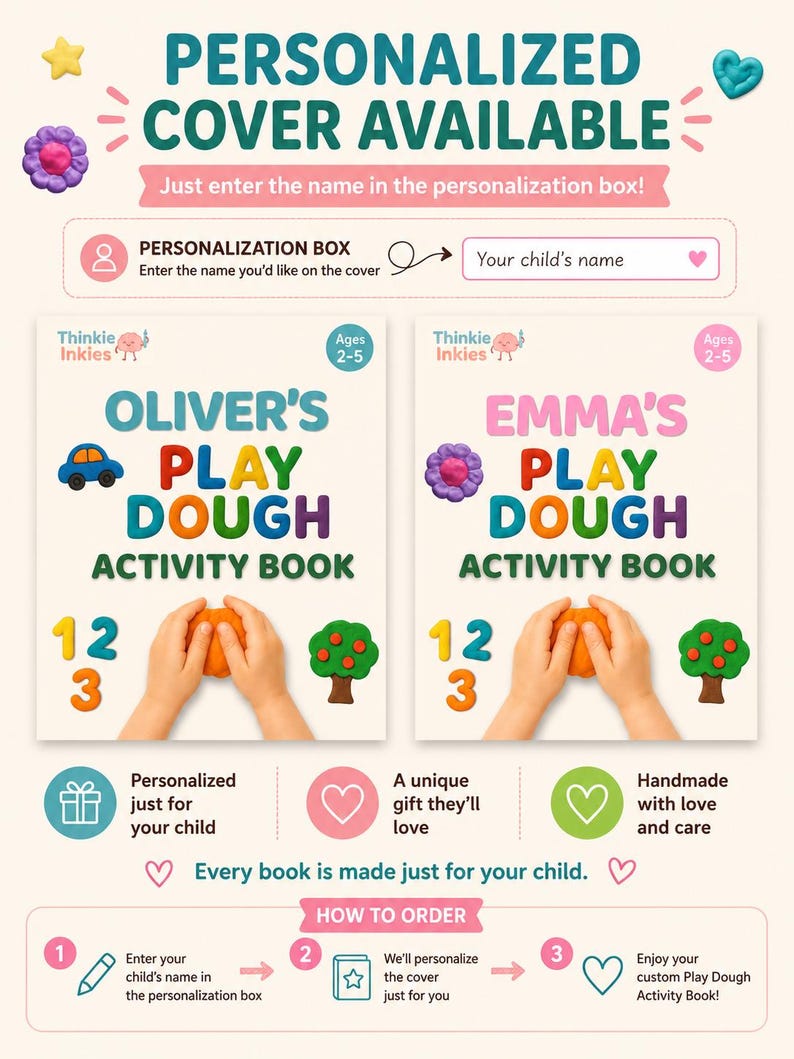
A play dough activity book is a useful bridge between an open-ended material and a visible prompt. Children can decorate a picture, fill an outline, or ignore the prompt and build beside it. Check whether dough is included or must be purchased separately, and follow the surface care instructions. If you add dough or tools, select products appropriate for the child and leave safety decisions with the caregiver.
A custom portrait activity book can make drawing, noticing, and storytelling feel personal. It may appeal to a child who likes talking about family members or recognizing familiar faces. Again, verify exactly what personalization materials the seller needs and what the finished product contains. Customized goods usually require careful review because a spelling mistake or unsuitable photo can be difficult to change after production begins.
Use a five-question gift check before checkout
A quick check prevents many well-meant gifts from becoming storage problems. Does the format fit the family’s routine? Is the current product guidance appropriate for the intended child? Are the personalization details exact? Does the family need extra materials to use it? Is there a clear place to store or display it? If you cannot answer one of these questions, ask the caregiver or seller before purchasing.
Finish the gift with a simple invitation rather than a performance expectation: “This looked like something you could explore together.” Avoid promising that a product will accelerate a particular skill. Educational materials are most valuable when they support shared attention, repetition, conversation, and play in ways that work for that household. For a baby shower rather than a toddler birthday, the ABC book alternative guide offers a collaborative keepsake idea guests can help create.
Every child develops differently. Use age guidance, supervise activities and choose materials appropriate for your child and home.
Written and reviewed by the ThinkieInkies team behind these learning tools. Product details are available in the linked product listings; general learning ideas are provided for inspiration and should be adapted to each child with adult supervision.