
A preschool family game night can be a few short games around the table or on a clear floor. You do not need a collection of boxed games, and you do not need to keep score. Choose games that let adults and children contribute at different levels.
Start with two options and let the child help choose. Keep permission to watch, take a break, or join later.
Draw a little, tell a little
One person makes a large simple mark on paper. The next adds another mark or explains what it might become. Continue until the group decides the picture is finished.
Ask before changing someone else's contribution, and use separate sheets if sharing a drawing becomes frustrating. The result can be strange; resemblance to a real object is not the goal.
Guess from a helpful clue
Choose an object pictured in a familiar book. Offer a clue such as its color or what a character does with it. The child can point, describe, or ask for another clue.
Take turns giving clues too. Avoid clues based on knowledge the child has not encountered, and do not tease someone for an unexpected guess.
Make a family pattern
One person invents two comfortable sounds or gestures, such as clap then wave. Everyone repeats the pair. Another person changes the pattern for the next round.
Use movements that suit everyone present. Our preschool pattern guide explains how to make the repeating part clear without turning the game into a worksheet.
Tell a story with shared choices
An adult begins with a character and a place. The child chooses what the character wants. Another player introduces something that happens along the way.
If inventing an answer is difficult, offer two possibilities. End when the story reaches a comfortable stopping point, not after a fixed number of turns.
Make waiting manageable
Keep turns short and the next action visible. A child can have a helper or act alongside an adult. If waiting becomes too difficult, switch to a cooperative activity where everyone can participate at once.
Do not interpret a difficult game night as a judgment about a child's social skills. Fatigue, interest, and the format all affect participation.
Use a reusable surface carefully
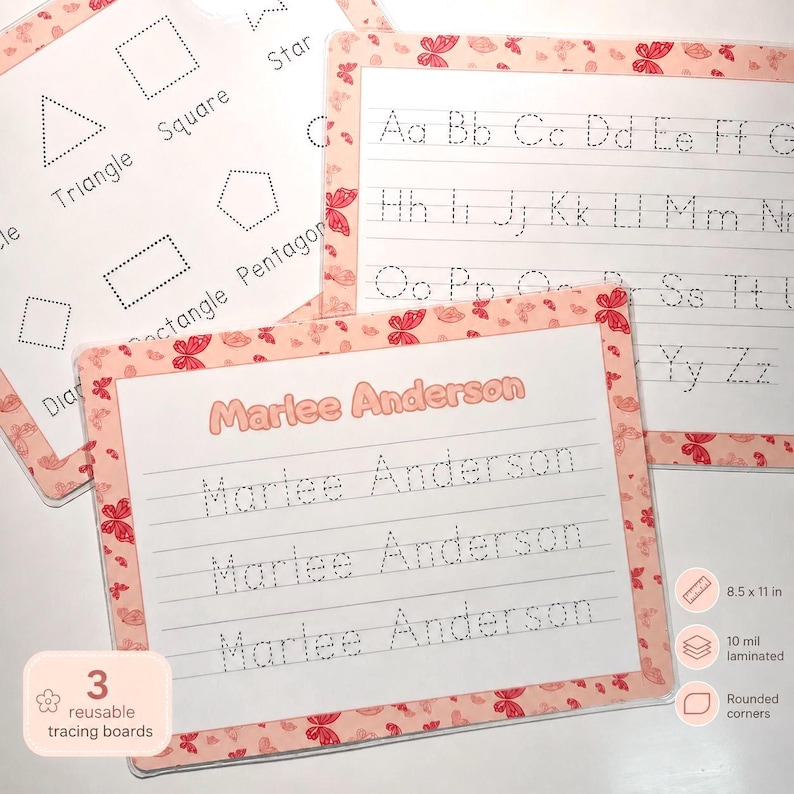
A suitable board can hold a shared mark or a simple pattern if its instructions allow that use. The tracing boards set is one option to inspect; plain paper works for these games too. An adult should manage tools and cleanup according to the product guidance.
Ask before erasing a child's drawing. They may want to preserve it, even when the game used a reusable surface.
How do we include siblings of different ages? Give them different roles within the same story rather than requiring identical answers. Our sibling activity and gift guide offers practical ways to share materials while respecting personal work. End the evening with a favorite game so the next invitation feels familiar.
Every child develops differently. Use age guidance, supervise activities and choose materials appropriate for your child and home.
Published by ThinkieInkies. General play ideas, not clinical advice. Product details are available in the linked product listings; general learning ideas are provided for inspiration and should be adapted to each child with adult supervision.