The most useful educational gift for a four-year-old is one the child wants to use and the family can comfortably support. Age labels help narrow a search, but two children of the same age may enjoy very different activities.
Ask what the child chooses during free time before deciding what they ought to practice.
Match the gift to a kind of play
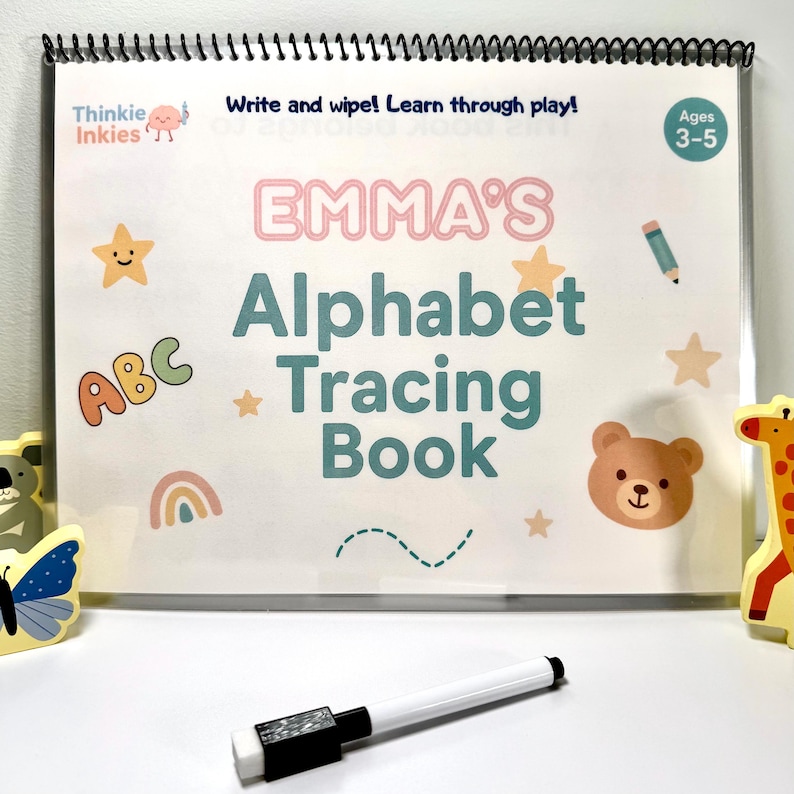
For a child who likes marks and letters: consider a clear drawing or tracing format with space to experiment. A personalized alphabet book is one option to inspect, especially if the child already enjoys seeing their own name in print.
For a child who likes building and shaping: a suitable play dough activity may be a better fit. Check whether dough is included, the materials' age guidance, and the family's preferences about mess.
For a child who likes stories: a picture book or storytelling activity may offer more use than a workbook. A learning gift does not have to contain exercises.
Ask the caregiver three practical questions
What materials does the child already enjoy? What does the family already own? Would they prefer a physical item or a printable that requires preparation?
These questions prevent giving a second version of the same resource or surprising a busy family with a project that needs printing, cutting, and assembly.
Check what the gift actually contains
Look at inside pages, dimensions, language, and accessories. A polished cover does not tell you whether the activities are readable or suited to the child's interests.
Avoid assuming that “educational” means tested for a particular learning outcome. Choose a gift for the opportunities it offers—drawing, noticing, building, conversation—without promising that it will make the child read earlier or enter school ahead of peers.
Personalize carefully
Confirm the name directly with the caregiver, including capitalization and accents. Do not guess from a social profile or an informal nickname. Ask the seller about unsupported characters or a long-name layout before ordering.
Review the current processing and delivery information, particularly for a birthday. A made-to-order item has a preparation stage as well as transit time.
Include an invitation to use it together
A short gift note can suggest one activity: “Let's make a pretend sign for your favorite toy.” If you are nearby, offer a shared session rather than presenting the book as work the child must finish.
For a grandparent-specific approach, see gifts built around shared time. For choosing among formats, read activity book, storybook, or name board.
Is a more advanced gift better? Not necessarily. A gift that requires constant correction can be less inviting than a simpler resource the child can explore confidently. Choose fit and enjoyment over the largest age range or the longest list of promised skills.
Every child develops differently. Use age guidance, supervise activities and choose materials appropriate for your child and home.
Published by ThinkieInkies. General play ideas, not clinical advice. Product details are available in the linked product listings; general learning ideas are provided for inspiration and should be adapted to each child with adult supervision.