Build one safe, repeatable photo setup
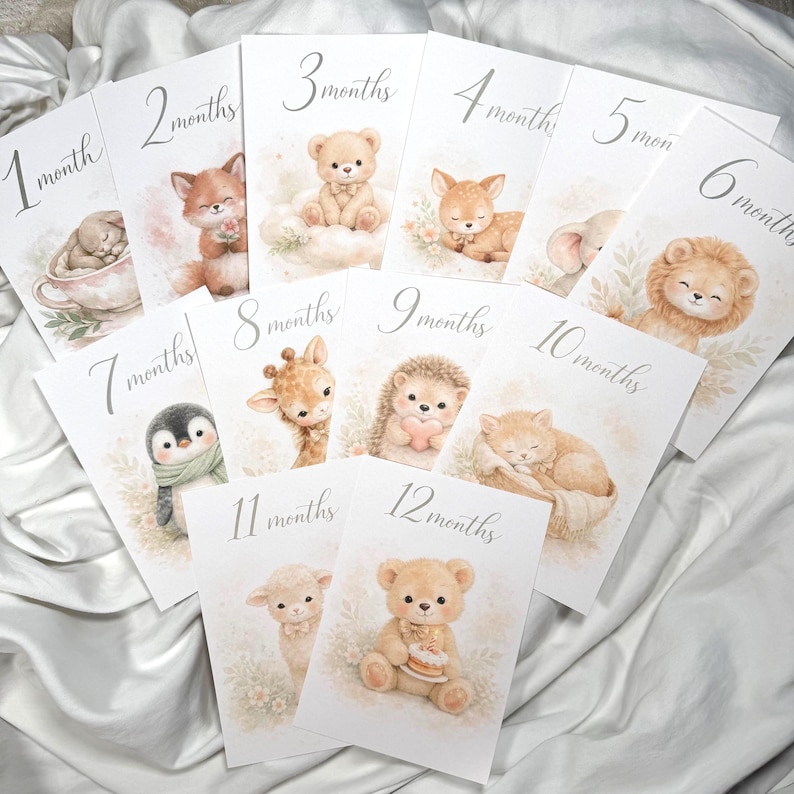
A monthly photo does not need a decorated studio. Choose a calm time when the baby is awake and an adult can give the setup full attention. A firm, clean floor-level mat with the photographer close by is usually easier to manage than an elevated bed, table, or improvised prop. Place the milestone card beside the baby rather than in their hand or near their face, and remove it as soon as the photo is finished. Never leave a baby unattended with cards, props, cords, or loose decorations.
Consistency can come from one small element: the same camera angle, plain background, card position, or patch of window light. It does not require the same pose or a cooperative smile. Babies move, look away, and have unpredictable days. Take a few frames, stop when the moment is no longer comfortable, and accept the photograph that honestly records that month. The twenty ideas below can be simplified to match the baby’s mobility and the space available.
Ideas 1–5: begin with simple monthly portraits
Use these first ideas when you want a repeatable visual structure with very little preparation. Keep every setup at floor level or safely supported by an adult, and move the card farther away once the baby begins reaching for it.
- 1. The same-background series: place the card in the same corner of a plain floor mat each month and photograph from the same safe position.
- 2. The overhead crop: with another adult beside the baby, photograph the baby and card from above without standing on furniture or placing equipment overhead.
- 3. The side-by-side portrait: position the card outside arm’s reach and frame the baby’s profile, relaxed hands, or curious gaze from floor level.
- 4. The close-detail frame: photograph feet or hands with the milestone card visible farther back, keeping the baby comfortably dressed and fully supervised.
- 5. The grown-with-me outfit: use the same roomy, appropriate garment or color family when practical, without forcing clothing that no longer fits comfortably.
Ideas 6–10: mark the season without building a set
Seasonal context can come from color and light rather than loose decorations. Avoid small objects, unstable baskets, strings, heavy signs, and anything a baby could grab or mouth. One adult-held or distant background detail is enough.
- 6. The window-weather photo: keep the baby safely indoors and include soft rain, snow, leaves, or bright sky through a background window.
- 7. The seasonal-color layer: choose one flat fabric in a seasonal color beneath the card, checking that it stays smooth and away from the baby’s face.
- 8. The holiday-without-costume frame: use one familiar color or an adult-held decoration in the distant background instead of an uncomfortable outfit or elaborate pose.
- 9. The daylight-change series: return to the same room each month and let the changing natural light quietly show the passage of the year.
- 10. The favorite-book season: let an adult hold a current board book near the edge of the frame while the milestone card remains visible and separate.
Ideas 11–15: include family and everyday details
The first year belongs to the family routine as much as to a monthly number. Invite another person into the frame only when they can hold or sit with the baby safely, and ask before sharing anyone’s image outside the family.
- 11. The parent-hands portrait: show an adult’s hands gently supporting the baby while the card sits on a separate nearby surface.
- 12. The lap photo: photograph the baby securely held on a parent’s or grandparent’s lap, with the adult holding the card away from the baby’s face.
- 13. The sibling hello: seat or position siblings with direct adult support, keep the session brief, and let a second adult manage the card and camera.
- 14. The everyday-object scale: place one large, familiar, age-suitable toy in the background each month, removing it if it distracts or creates a safety concern.
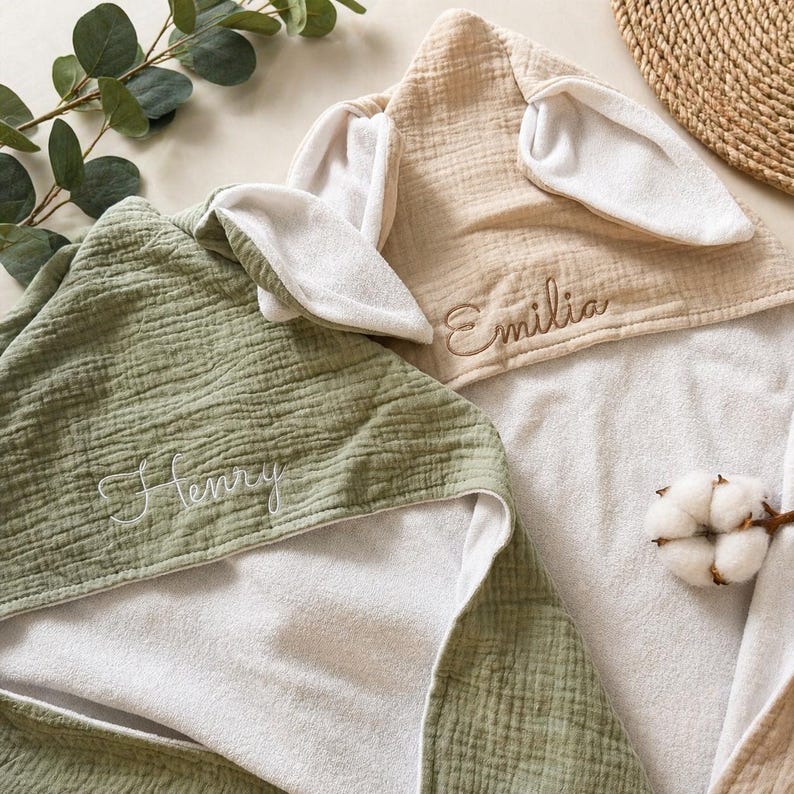
- 15. The after-bath memory: once the baby is completely dry, dressed, and away from water, include a folded bunny-ear towel beside the card as a familiar detail.
Ideas 16–20: turn separate photos into a first-year story
Later photographs can echo earlier ones without recreating them exactly. Use the card as the clear time marker and let changes in expression, movement, favorite objects, and family participation tell the rest of the story.
- 16. The favorite-page photo: an adult holds one page from a family book at the frame edge while the baby and monthly card remain the main subjects.
- 17. The matching-animal moment: pair the watercolor animal on the card with one larger animal picture in the background, without surrounding the baby with loose props.
- 18. The then-and-now angle: at six or twelve months, repeat the safe camera angle from the first photo and place the two images together later.
- 19. The family-note frame: photograph the card beside a short adult-written note about that month, keeping names and private details out if the image may be shared.
- 20. The first-birthday finish: take one uncomplicated twelve-month portrait, then create a separate digital grid from all monthly images instead of surrounding the baby with cards.
Use soft light, protect privacy, and save the files
Indirect window light usually gives a softer result than direct sun or a harsh overhead fixture. Face the setup toward the window, turn off distracting mixed-color lights, and tap the baby’s face on the phone screen to set focus and exposure. Avoid placing a lamp, tripod, phone, or cable where it can fall or be reached. Flash is rarely necessary for this kind of close family record; if the room is too dark, move the session to another time rather than adding an unstable lighting setup.
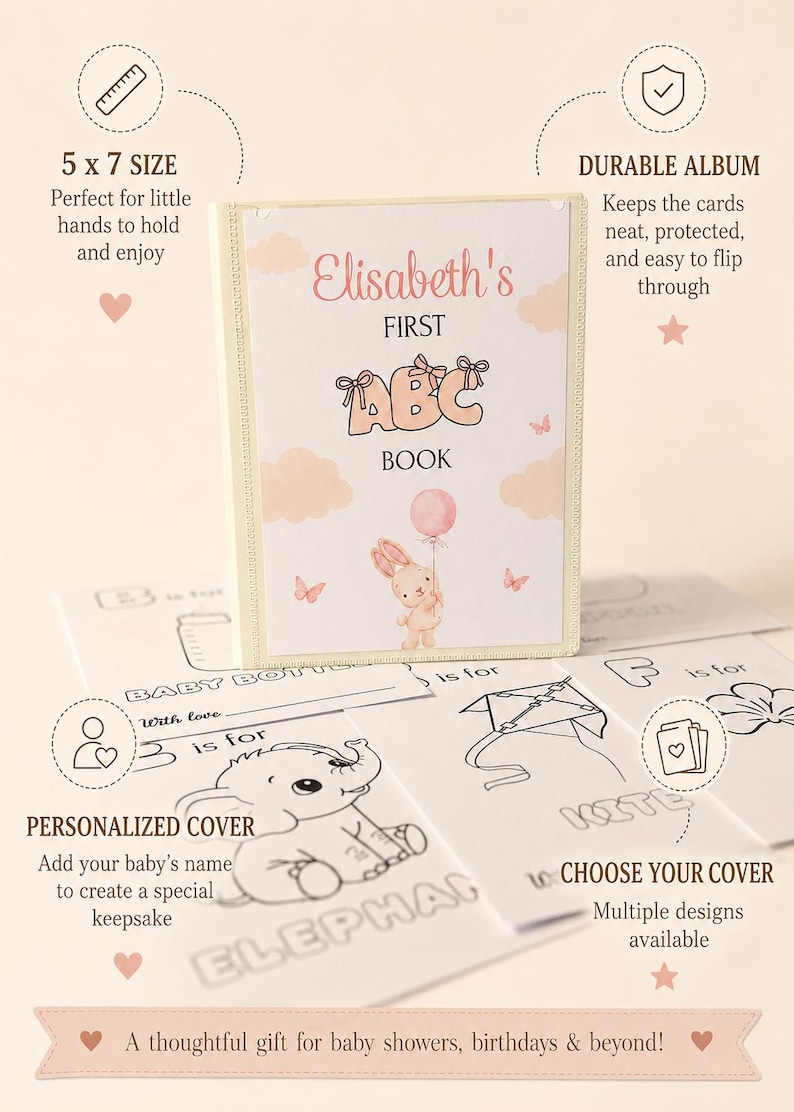
Decide whether the series is private before the first post, not after twelve months of sharing. A family can keep every image offline, share only with a closed group, crop identifying room details, and avoid names, birth data, addresses, routines, or real-time location clues. Save the original files in a dated folder, keep a second copy on another trusted device or service, and note which image represents each month. Printed favorites and a family ABC keepsake can preserve the story without making a public timeline necessary.
Every child develops differently. Use age guidance, supervise activities and choose materials appropriate for your child and home.
Written and reviewed by the ThinkieInkies team behind these learning tools. Product details are available in the linked product listings; general learning ideas are provided for inspiration and should be adapted to each child with adult supervision.